
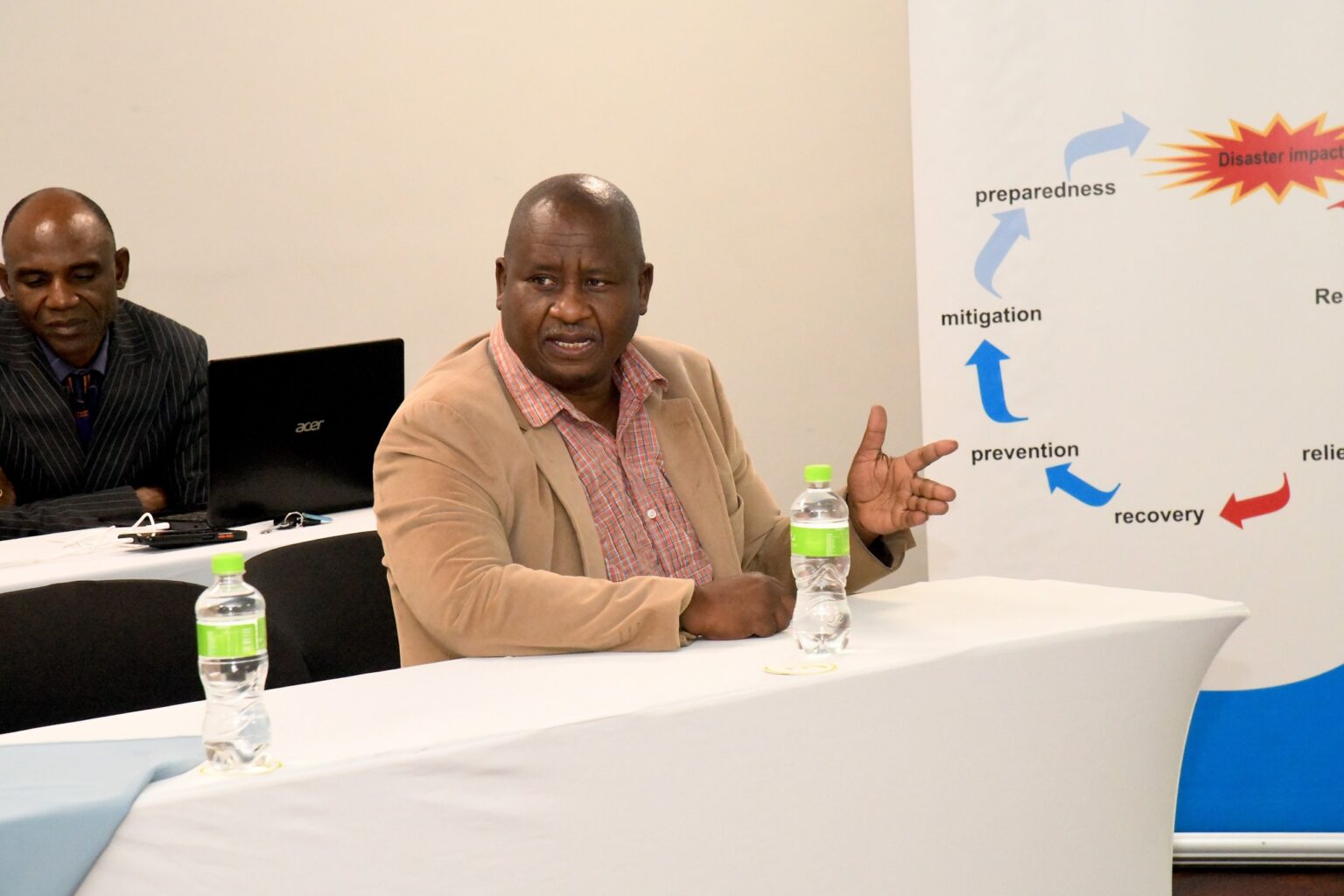
The National Disaster Management Office (NDMO), working together with the Department of Meteorological Services (DMS), has completed a two-day Technical Preparation and Baseline Consolidation Workshop on Impact-Based Forecasting (IBF) and Action-Based Forecasting (ABF). The workshop marks a major step in strengthening Botswana’s disaster preparedness systems and improving how weather and climate risks are communicated to the public. It brought together technical experts, policymakers, and sector stakeholders to support the implementation of the Early Warning for All initiative. This global initiative aims to ensure that every person receives timely and effective warnings for hazardous weather and climate-related events. The completion of the workshop signals a shift toward more coordinated and people-focused disaster risk communication in the country.
The workshop gathered representatives from multiple institutions, including the NDMO, DMS, Department of Water and Sanitation, academia, disaster risk management bodies, the agriculture and health sectors, the Botswana Red Cross Society, and local authorities. Each participant contributed expertise on how early warning systems can be improved to better serve communities and decision-makers. Discussions focused on building stronger collaboration between sectors that deal directly with climate risks and emergency response. The wide participation reflected the growing recognition that disaster preparedness requires shared responsibility across government and civil society. This collective approach is designed to ensure that warnings are not only issued but also understood and acted upon effectively.
A key focus of the workshop was the transition from traditional weather forecasting methods to impact-based and action-based forecasting systems. Traditional forecasts often describe weather conditions, but they do not always explain what those conditions mean for people’s daily lives. The new approach prioritizes clear communication of potential impacts such as flooding, crop loss, infrastructure damage, or health risks. It also provides specific guidance on actions that communities and institutions should take to reduce harm. This shift is intended to make forecasts more practical, actionable, and relevant to real-world decision-making.
Through technical presentations and group discussions, participants examined how meteorological data can be translated into meaningful information for different sectors. The sessions explored how early warning messages can be tailored to meet the needs of farmers, health workers, emergency responders, and local authorities. The workshop also focused on consolidating baseline information that will guide the future development of Botswana’s early warning systems. Strengthening coordination between institutions was identified as essential for improving response times and reducing disaster impacts. The engagement helped identify gaps in current systems and opportunities for improvement.
One of the major outcomes of the workshop was the agreement that early warning systems must be designed with communities at the centre. Participants emphasized that warning messages should be clear, accessible, and available in local languages to ensure broad understanding. Cultural relevance and simplicity were highlighted as important factors in improving public response to warnings. Trust in official communication was also identified as a critical element in ensuring that communities take appropriate action during emergencies. Without trust and clarity, even accurate forecasts may fail to protect lives and property.
The adoption of Impact-Based Forecasting and Action-Based Forecasting is expected to significantly improve Botswana’s ability to manage climate-related hazards. These include floods, droughts, heatwaves, and severe storms, all of which have increasing potential to disrupt livelihoods and infrastructure. By linking forecasts directly to expected impacts, authorities will be able to issue more targeted alerts and allocate resources more efficiently. This proactive approach supports earlier decision-making and reduces the likelihood of large-scale disaster losses. It also strengthens national resilience in the face of a changing climate.
As climate risks continue to grow globally, Botswana’s investment in modern early warning systems reflects a proactive national strategy. The integration of IBF and ABF supports long-term goals of protecting lives, securing livelihoods, and strengthening community resilience. It also aligns with global standards in disaster risk reduction and emergency preparedness. The workshop reinforced the importance of continuous collaboration between institutions responsible for forecasting, planning, and response. This coordinated approach ensures that early warning systems remain effective, reliable, and responsive to emerging threats.
The workshop forms part of broader national efforts to align disaster risk reduction strategies with international best practices. It also supports the goal of ensuring that early warning information reaches all citizens in a format that is understandable and actionable. By improving communication and coordination across sectors, Botswana is building a stronger foundation for disaster resilience. The outcomes of this workshop will guide future improvements in forecasting systems and emergency response planning. The initiative represents a long-term commitment to safeguarding communities and reducing the impact of climate-related disasters across the country.