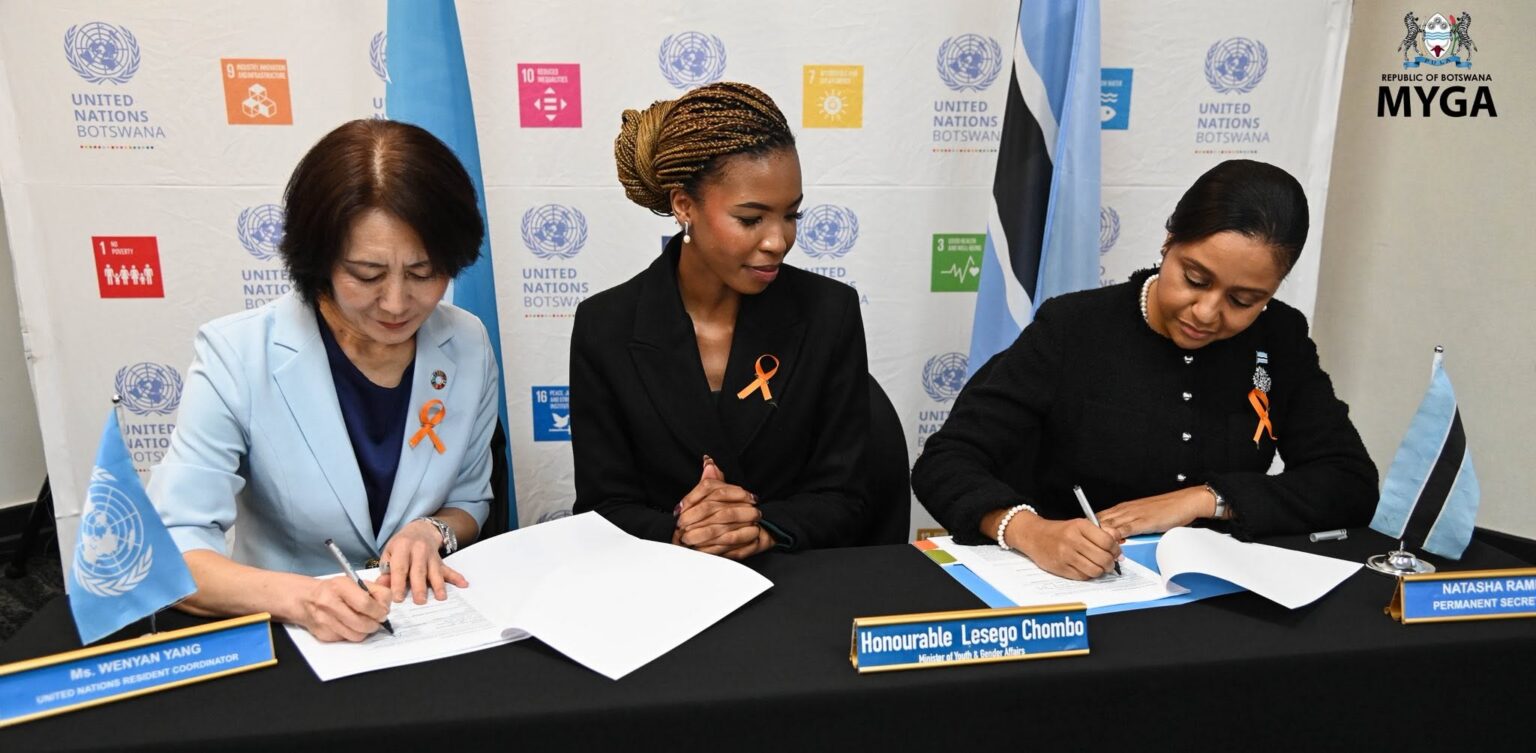
Botswana has taken a significant step in strengthening its national response to gender-based violence through the signing of a Joint Gender-Based Violence Prevention and Response Programme between the Ministry of Youth and Gender Affairs and UN Botswana. The agreement was formalised yesterday morning during a High-Level Development Partners Forum focused on coordinated action against GBV. The programme is designed to improve prevention efforts, enhance survivor support systems, and strengthen institutional coordination across key sectors. It comes at a time when GBV continues to affect individuals, families, and communities across the country. The initiative signals a stronger commitment to collective responsibility and long term structural change in addressing violence.
The Permanent Secretary in the Ministry of Youth and Gender Affairs, Ms Natasha Rampa, delivered the opening remarks and highlighted the urgency of coordinated action. She stressed that at least 37 percent of women in Botswana have experienced violence in their lifetime, while 30 percent of men report having perpetrated gender-based violence. These figures, she noted, reflect a deep social challenge that requires sustained and united intervention. She explained that the new programme draws inspiration from a regional initiative discussed in Pretoria in 2023, which focuses on reducing gender inequality and empowering women and girls by 2030. The programme aims to bring together government, civil society, development partners, the private sector, and communities to work in a structured and coordinated way.
The Ministry of Youth and Gender Affairs Ministry of Youth and Gender Affairs Botswana and UN Botswana United Nations Botswana will jointly lead the implementation of the programme, ensuring alignment between national priorities and global gender equality frameworks. Ms Rampa emphasized that the partnership model is essential for achieving measurable progress in GBV prevention and response. She noted that technical expertise from multiple stakeholders will be leveraged to strengthen interventions and improve outcomes. The programme also seeks to close gaps in service delivery, particularly in rural and underserved communities. By building stronger coordination mechanisms, the initiative aims to ensure that no survivor is left without access to support.
UN Resident Coordinator Ms Wenyan Yang commended Botswana for its continued commitment to gender equality and GBV prevention. She stated that the statistics presented during the forum serve as a reminder that GBV remains a persistent challenge affecting national development. She described the issue as both a human rights concern and a barrier to sustainable development. Ms Yang reaffirmed the United Nations’ commitment to supporting Botswana in strengthening prevention systems and survivor services. She also described the fight against GBV as a moral responsibility that requires consistent and coordinated action across all sectors of society.
Ms Yang further stressed that partnerships remain central to effective GBV interventions. She explained that the complexity of gender-based violence requires collaboration between government institutions, non-governmental organisations, the private sector, survivors, and communities. She highlighted the importance of investing in prevention programmes at community level, where social norms and behaviours can be influenced early. She also called for stronger data collection systems to improve evidence-based decision making and policy development. According to her, reliable data is essential for tracking progress and identifying gaps in response systems.
Minister of Youth and Gender Affairs, Hon. Lesego Chombo, also addressed the forum and expressed gratitude to development partners for their continued support. She acknowledged the contributions of international organisations, diplomatic missions, and local stakeholders in advancing gender equality in Botswana. She highlighted key achievements made through past collaborations, including the development of national GBV strategies, the establishment of specialised GBV courts, and the creation of economic empowerment programmes for women. She also pointed to the establishment of the Gender and Child Protection Branch within the Botswana Police Service as a significant institutional milestone. These developments, she said, demonstrate progress while also reinforcing the need for continued action.
Hon. Chombo further revealed that GBV remains a serious concern, citing police records for the first quarter of 2026, which recorded 1,517 cases. These cases include offences such as murder, rape, assault, and crimes involving children. She noted that these figures highlight the urgent need to strengthen both prevention and response systems. The Minister reaffirmed government commitment to improving legislation, expanding survivor support services, and enhancing prevention programmes. She also emphasized the importance of engaging men and boys as active participants in efforts to end gender-based violence.
Representatives from the Delegation of the European Union to Botswana and SADC European Union Delegation to Botswana and SADC, Debswana Debswana Diamond Company, and the Botswana Council of Non-Governmental Organisations BOCONGO also contributed to the discussions. They agreed that stronger community awareness is essential for changing harmful behaviours and preventing violence. They also emphasized the importance of addressing mental health needs for both survivors and perpetrators as part of a comprehensive response. Improved support services and coordinated national action were identified as critical priorities. The stakeholders collectively described GBV as a national crisis that requires unified and sustained intervention.
The signing of the Joint GBV Prevention and Response Programme marks a significant step in Botswana’s national response to gender-based violence. It brings together government, international partners, and civil society in a structured effort to address both immediate needs and long term causes of violence. The focus on prevention, survivor support, data systems, and community engagement reflects a comprehensive approach to the issue. As implementation begins, the success of the programme will depend on sustained collaboration and accountability across all sectors. Botswana’s commitment to tackling GBV signals a stronger national resolve to protect dignity, promote equality, and build safer communities for all.