
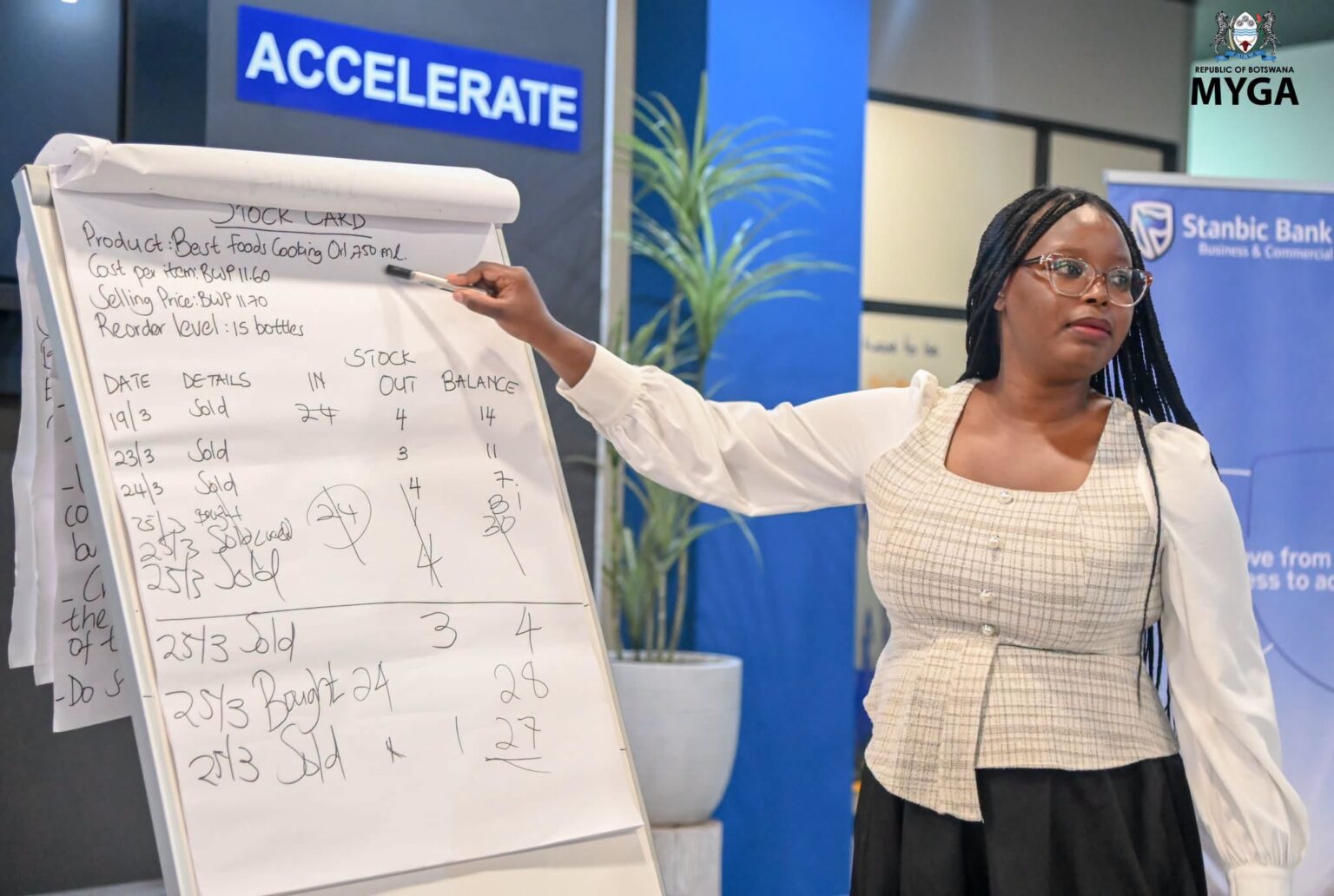
Knowing what to buy, when to reorder and how to keep accurate stock records can make a major difference to the success of a small business. These practical skills took centre stage during Day 2 of the EntreprenHER Programme, which focused on buying and stock control. The training gave women entrepreneurs practical tools for making informed purchasing decisions, managing inventory and reducing avoidable business losses. Participants also learned how effective stock management can improve daily operations, cash flow and the ability to meet customer demand. By developing these skills, the programme is helping women entrepreneurs build businesses that can operate more efficiently and sustainably.
Buying the right products in the right quantities is an important part of business management. Poor purchasing decisions can leave a business with too much stock, products that do not sell or insufficient goods to meet customer demand. Participants were encouraged to approach buying decisions carefully and consider factors such as customer needs, sales patterns, product movement and available funds. The training also emphasised the importance of developing strong relationships with suppliers. These relationships can help entrepreneurs establish reliable sources of stock and create better conditions for long-term business operations.
Participants learned that maintaining a small and reliable network of suppliers can provide practical advantages. Working consistently with trusted suppliers can make it easier for businesses to maintain product quality and ensure regular access to goods. Buying regularly and paying suppliers on time can also help entrepreneurs build trust and establish a positive business relationship. Over time, reliable purchasing patterns and good payment practices may create opportunities to negotiate better discounts or terms. Strong supplier relationships can therefore become an important part of managing costs and maintaining a consistent supply of products.
Negotiating with suppliers was also linked to the wider goal of improving business efficiency. Entrepreneurs need to understand how much they can afford to spend and how purchasing decisions affect their overall business finances. Buying in a way that matches actual customer demand can reduce the risk of tying up too much money in unsold stock. At the same time, maintaining sufficient stock helps businesses avoid disappointing customers when popular products run out. The training encouraged participants to find a practical balance between having enough products available and avoiding unnecessary excess stock.
Accurate record keeping formed another important part of the Day 2 training. Participants were introduced to Daily Cash Sales Records, Customer Account Records, Stock Cards and Supplier Invoices. Each record provides useful information that can help a business owner understand what is happening within the business. Keeping these records consistently makes it easier to monitor sales, track stock and understand transactions with customers and suppliers. Good records also give entrepreneurs reliable information to use when making purchasing and business planning decisions.
The Stock Card was presented as an important tool for monitoring individual products. Participants learned to maintain a Stock Card for each product so that stock movements and daily sales can be tracked. Recording stock as it comes into and leaves the business helps create a clearer picture of available inventory. This information can help entrepreneurs identify products that are selling quickly and those that are remaining on shelves for longer periods. When used consistently, Stock Cards can support better decisions about what to buy and when to reorder.
Stock-taking was another central part of the practical training. Stock-taking involves physically counting the products available in a business and comparing the physical quantities with the figures recorded in business records. This process can reveal differences that might otherwise go unnoticed. It can also help entrepreneurs identify damaged goods and determine which products are moving quickly or slowly. By regularly checking physical stock against recorded figures, business owners can make more informed decisions about future purchases.
The training demonstrated a structured approach to stock-taking that begins with arranging stock properly. Organising products makes counting easier and reduces the likelihood of overlooking items or counting them more than once. Entrepreneurs were then shown how to prepare a Stock-Taking List before starting the physical count. The next step involves counting and recording the quantities of products available. A clear process helps make stock-taking more accurate and gives business owners information they can use to manage inventory effectively.
After the physical quantities have been recorded, participants learned how to transfer information from their Stock Cards. The figures can then be compared with the quantities found during the physical stock count. Differences between the two figures can alert a business owner to potential problems that need further investigation. These differences may be connected to damaged goods, recording mistakes or other stock movements that were not accurately captured in the records. Comparing physical stock with recorded figures therefore provides an important check on the accuracy of a business’s inventory records.
The practical nature of the training allows participants to apply the concepts rather than simply learn them in theory. Entrepreneurs can use purchasing records, Stock Cards and physical stock counts as part of their regular business routines. This can help them understand how products move through their businesses and how purchasing decisions affect available stock. It can also help them recognise patterns in customer demand and respond more effectively to changes in sales. These practical habits can contribute to stronger day-to-day management and more informed decision-making.
Stock control can also help entrepreneurs protect the money they have invested in their businesses. Products that remain unsold for long periods can occupy valuable space and tie up funds that could be used elsewhere. Fast-moving products may require more frequent reordering to prevent shortages. Knowing the difference between these types of products allows business owners to make purchasing decisions based on actual stock movement rather than guesswork. Effective inventory management can therefore help entrepreneurs use their available resources more carefully.
The lessons from Day 2 form part of the wider objectives of the EntreprenHER Programme. The programme continues to equip women entrepreneurs with skills in areas such as marketing, costing, buying, stock control, record keeping, business planning and productivity. These areas are closely connected because decisions in one part of a business can affect performance in another. For example, effective marketing can increase demand while good stock control helps ensure that products are available to meet that demand. Strong costing and record keeping can then help entrepreneurs understand whether those sales are contributing to a sustainable business.
The focus on buying and stock control gives participants practical knowledge that they can apply directly to their businesses. Understanding what to purchase, working effectively with suppliers, keeping accurate records and conducting regular stock-taking can help entrepreneurs reduce avoidable mistakes. The training also encourages women business owners to base decisions on accurate information about sales and stock movement. These practices can improve efficiency while supporting more disciplined business management. As the EntreprenHER Programme continues, these skills can provide a useful foundation for entrepreneurs seeking to strengthen and sustain their businesses.
Day 2 of the EntreprenHER Programme demonstrated that effective stock control is not simply about counting products on shelves. It involves making informed purchasing decisions, maintaining reliable supplier relationships, keeping accurate records and regularly checking physical stock against recorded figures. These practices give entrepreneurs greater control over their inventory and provide information that can guide future business decisions. The hands-on training is strengthening participants’ ability to manage stock efficiently while supporting the wider goal of building sustainable women-owned businesses. By turning these lessons into everyday business practices, participants can make better purchasing decisions, minimise losses and improve the efficiency of their operations.