
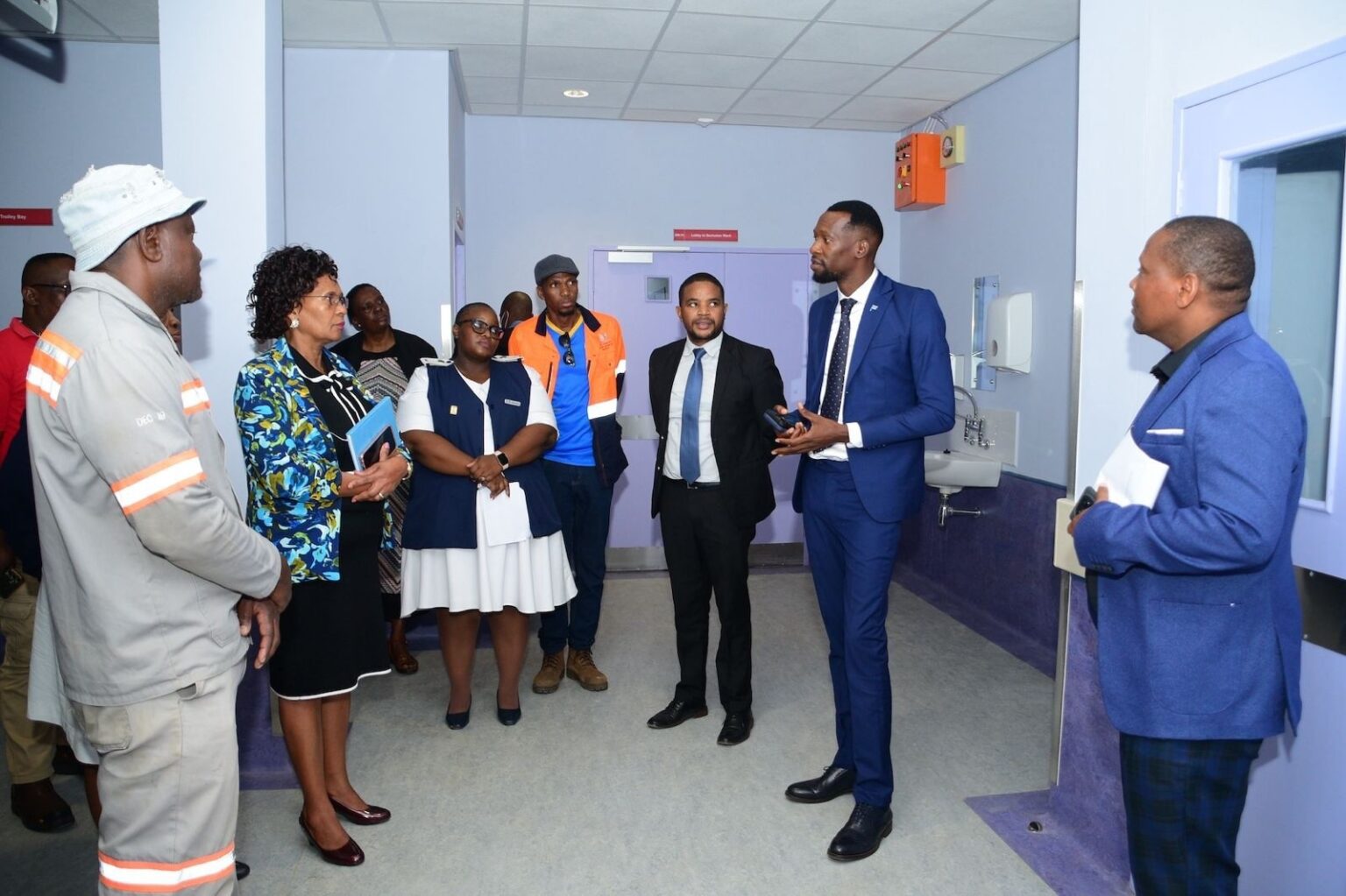
The construction of the new Moshupa Primary Hospital has entered a critical phase as government officials intensify oversight and preparation for its opening. The Assistant Minister of Health, Hon. Lawrence Ookeditse, conducted a site visit to assess the progress and confirm whether the project remains on schedule. His visit reflects a growing urgency to deliver essential healthcare infrastructure that meets the needs of the local population. The inspection also signals accountability, as earlier commitments made by the Ministry are now being tested against actual progress on the ground. With public expectations rising, the government continues to push for timely completion while ensuring quality standards are not compromised.
This latest visit follows an earlier inspection by the Minister of Health, Hon. Dr Stephen Modise, who had expressed confidence that the hospital would be ready for handover in April despite earlier delays. That earlier assessment set a clear benchmark and created momentum for the contractor to maintain progress. During the recent inspection, the contractor reaffirmed a firm commitment to meet the agreed deadline of the end of April 2026. This assurance is important because construction projects of this scale often face setbacks related to supply chains, labor, or technical challenges. The consistent messaging from both government and contractor suggests improved coordination and a shared focus on delivery.
The hospital project represents a major investment in strengthening primary healthcare services in the region. Facilities like Moshupa Primary Hospital play a key role in reducing pressure on larger referral hospitals by handling routine and preventive care at a local level. The design and infrastructure are expected to support a wide range of services, including outpatient care, maternal health, and emergency response. By placing healthcare services closer to communities, the government aims to improve access and reduce travel time for patients. This approach aligns with broader health system goals that prioritize early intervention and community-based care.
Beyond construction, the Ministry of Health has already started preparing for the operational phase of the hospital. This includes recruiting healthcare workers who will staff the facility and ensure continuous service delivery from day one. Training programs are being planned to equip staff with the skills needed to operate new medical equipment and follow updated clinical protocols. Procurement processes for essential equipment and supplies are also underway, which is a critical step in avoiding delays after the building is completed. These parallel efforts show that the government is not waiting for construction to finish before addressing operational readiness.
Equipping a hospital involves more than just purchasing machines and beds. It requires careful planning to match equipment with service needs and staff capacity. The Ministry is expected to focus on essential diagnostic tools, patient care systems, and emergency response resources. Proper installation and testing of this equipment will be necessary before the hospital can safely open to the public. In addition, supply chains for medicines and consumables must be secured to ensure uninterrupted service. These steps are often overlooked but are vital to the success of any new healthcare facility.
The progress at Moshupa Primary Hospital also highlights the importance of consistent project monitoring by government leaders. Regular site visits help identify potential issues early and create pressure for contractors to stay on track. They also provide an opportunity for transparent communication with the public about timelines and expectations. In this case, the alignment between previous and current assessments suggests that the project is being managed with a clear focus on results. This kind of oversight can improve outcomes and build public trust in government initiatives.
As the end of April 2026 approaches, attention will shift from construction milestones to final inspections and certification. Regulatory approvals must be secured to confirm that the hospital meets safety and operational standards. Once these approvals are in place, the transition to public use can begin. Community awareness campaigns may also be needed to inform residents about the services available and how to access them. This final phase will determine how smoothly the hospital integrates into the existing healthcare system.
The development of Moshupa Primary Hospital stands as a practical example of how infrastructure projects can directly impact public health outcomes. Timely completion, proper staffing, and adequate resourcing will determine its long-term success. The coordinated efforts between government officials and contractors show a clear intention to deliver on promises made to the community. If all current commitments are met, the hospital will soon begin serving patients and easing the burden on other facilities. This project reflects a focused effort to improve healthcare access and quality, with tangible benefits expected for residents in the near future.