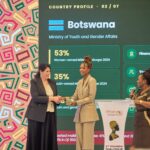

Hon. Lesego Chombo has emphasised the urgent need to institutionalise youth participation in governance, highlighting that Africa’s demographic profile must be mirrored in its leadership structures. Speaking at the African Summit, she underlined that Africa is the youngest continent in the world, with a median age of 19 and nearly 70 percent of the population under 30. Despite this, political and administrative leadership remains largely older, creating a generational gap that reduces the effectiveness of decision-making for youth-focused policies. Chombo stressed that young people are not interested in symbolic roles but in genuine participation that allows them to influence policies that directly affect their lives. She further noted that while over 80 percent of African youth support democratic systems, many remain dissatisfied with government performance, citing shortcomings in inclusion, accountability, transparency, and economic delivery.
Chombo used Botswana as an example of proactive steps to bridge the generational divide, highlighting ongoing reforms aimed at youth empowerment. These reforms include strengthening legislation addressing gender based violence, reviewing the National Youth Policy to ensure it meets contemporary challenges, and implementing targeted programmes to tackle youth unemployment, currently estimated at nearly 38 percent. She highlighted that effective youth engagement must be systemic, embedded into governance frameworks, and linked to measurable outcomes rather than ad hoc initiatives. Chombo also stressed the importance of intergenerational collaboration, arguing that pairing experienced leaders with youth representatives can enhance policy relevance, innovation, and responsiveness. She further noted that youth inclusion in governance should extend beyond advisory roles to actual decision-making authority, especially in sectors such as economic planning, technology, and social development.
In addition, Chombo called for regional and continental mechanisms to support youth participation in leadership. She suggested that African Union member states should create platforms for young people to engage directly with policymakers, contribute to legislative drafting, and hold leaders accountable. Chombo stressed that this engagement is critical for the successful implementation of Agenda 2063, which envisions an integrated, prosperous, and inclusive Africa. She also highlighted the potential of youth-led initiatives to drive innovation, economic growth, and social transformation when supported by institutional frameworks. By embedding youth participation structurally, African governments can harness the skills, energy, and creativity of the continent’s largest demographic, ensuring that governance reflects the realities, aspirations, and potential of young Africans.
This approach, Chombo argued, would not only improve policy outcomes but also strengthen democratic legitimacy, foster civic engagement, and build resilient societies capable of meeting the continent’s development goals.