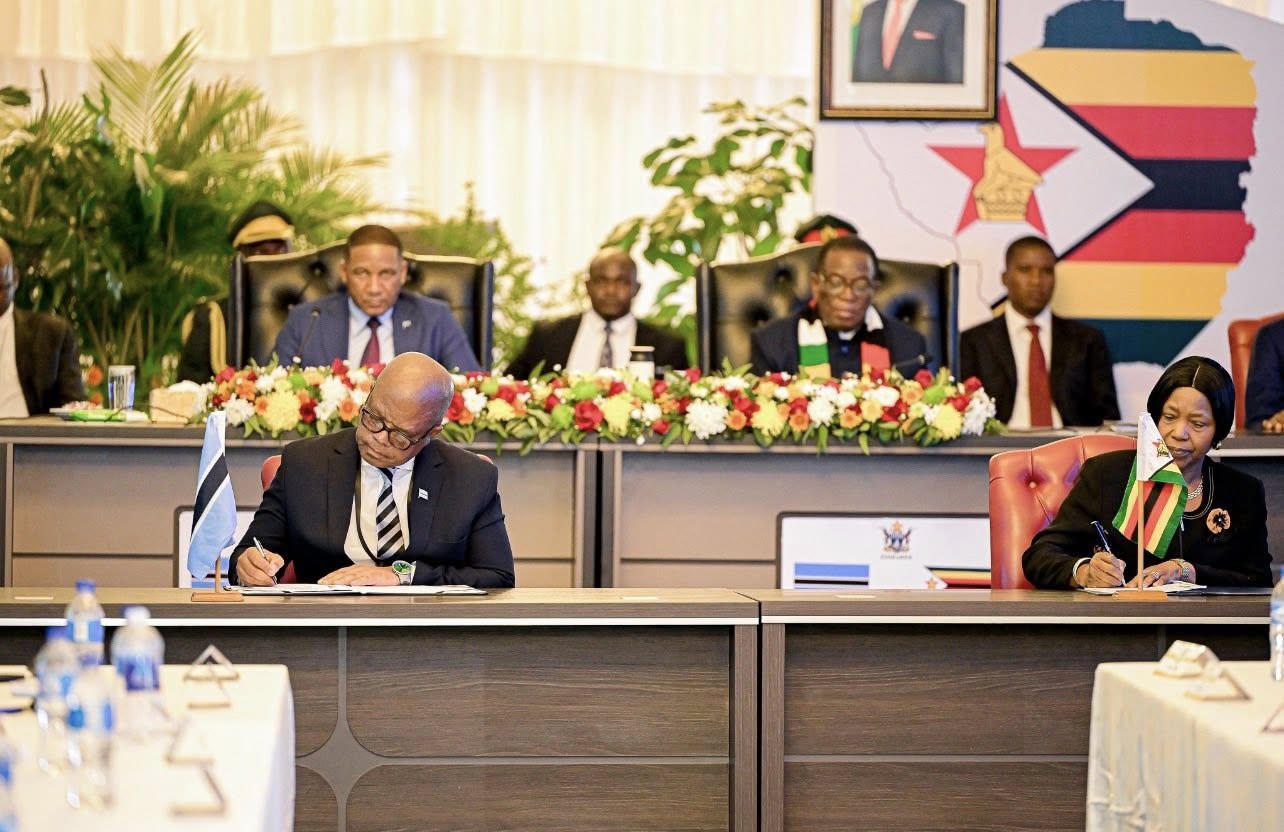
The 5th Session of the Botswana and Zimbabwe Bi-National Commission (BNC) concluded yesterday with the signing of a wide range of agreements aimed at deepening cooperation between the two neighboring countries. The high-level meeting marked another step forward in strengthening diplomatic, economic, and security relations between Botswana and Zimbabwe. A total of eight memorandums of understanding and two memorandums of agreement were signed, covering key areas such as defence, security, immigration, trade, and cultural cooperation. The session reflected a shared commitment to addressing cross-border challenges while promoting regional stability and development. Both countries emphasized the importance of structured collaboration in achieving long-term mutual benefits.
A major focus of the agreements was security cooperation, particularly in response to cross-border crimes that affect both nations. The Agreement on Defence Cooperation and Training Exchange Programmes was signed to enhance joint training initiatives and improve coordination between defence forces. This agreement is expected to strengthen operational readiness and build shared capacity in addressing regional security threats. In addition, the Police Cooperation agreement on combating livestock theft and other cross-border crimes was introduced to tackle criminal activities that affect rural communities and agricultural economies. Livestock theft has long been a concern in border regions, and this agreement aims to improve intelligence sharing and coordinated enforcement efforts.
Immigration management also featured prominently among the signed memorandums, with the MoU on Immigration Cooperation designed to improve border control systems and streamline movement between the two countries. This agreement is expected to enhance information sharing between immigration authorities and reduce illegal cross-border movement. It also aims to facilitate legal travel and improve efficiency at border posts. By strengthening immigration cooperation, Botswana and Zimbabwe are working to ensure secure and well-managed borders that support both national security and economic activity. This is particularly important given the high level of movement between the two countries for trade, work, and family connections.
Correctional services and justice cooperation were also addressed through agreements focused on prison systems and the transfer of sentenced persons. The Cooperation in the Field of Prison and Correctional Services agreement is designed to improve standards, share best practices, and support rehabilitation efforts. The Transfer of Sentenced Persons agreement allows eligible prisoners to serve their sentences in their home countries, promoting family unity and easing correctional system pressures. These agreements reflect a shared understanding of the importance of humane treatment and efficient correctional management. They also strengthen legal cooperation between the two justice systems, ensuring consistency and fairness in handling offenders.
Transport safety and emergency response cooperation were also prioritized during the session. The Coordination of Aeronautical Search and Rescue Services agreement aims to improve joint response capabilities in aviation emergencies. This ensures faster and more effective action in cases of aircraft distress, particularly in border or remote areas. In addition, the Cooperation in the Field of Civil Aircraft Accidents and Serious Incidents Investigations agreement establishes a framework for joint investigations and technical collaboration. These measures are intended to enhance aviation safety standards and ensure that both countries are prepared to respond to emergencies with speed and coordination. This level of cooperation is essential in maintaining safe regional airspace operations.
Economic development and trade were also central themes of the agreements signed at the BNC session. The Cooperation in the Promotion of Cooperatives, Micro, Small and Medium Enterprises Development agreement aims to support entrepreneurship and strengthen small business growth in both countries. By promoting MSMEs, Botswana and Zimbabwe seek to create jobs, encourage innovation, and stimulate local economies. The Economic Trade and Investment Promotions agreement further strengthens efforts to attract investment and expand trade opportunities between the two nations. These initiatives are designed to improve economic integration and unlock new markets for businesses on both sides of the border.
Cultural cooperation was also highlighted through the Collaboration in the Museum of African Liberation agreement. This initiative focuses on preserving and promoting shared historical narratives and cultural heritage. The development of the Museum of African Liberation is expected to serve as a symbol of regional unity and historical awareness. It will also support education, tourism, and cultural exchange between the two countries. By investing in cultural institutions, Botswana and Zimbabwe are reinforcing the importance of identity and shared history in building stronger bilateral relations.
The signing of these agreements demonstrates a comprehensive and structured approach to regional cooperation. The wide range of sectors covered reflects the complexity of modern governance and the need for coordinated solutions to shared challenges. From security and immigration to trade and culture, the agreements provide a framework for long-term collaboration. Both governments have shown commitment to turning diplomatic discussions into practical outcomes that benefit citizens directly. This approach strengthens trust and ensures that bilateral relations remain active and results-driven.
The 5th Session of the Botswana and Zimbabwe Bi-National Commission represents a significant milestone in strengthening relations between the two countries. The signing of eight memorandums of understanding and two memorandums of agreement highlights a shared commitment to cooperation across multiple sectors. These agreements address critical areas such as security, immigration, justice, aviation safety, economic development, and cultural preservation. By formalizing these partnerships, Botswana and Zimbabwe are laying the foundation for improved regional stability, economic growth, and social development. The outcomes of this session reflect a forward-looking approach that prioritizes practical collaboration and long-term mutual benefit for both nations.