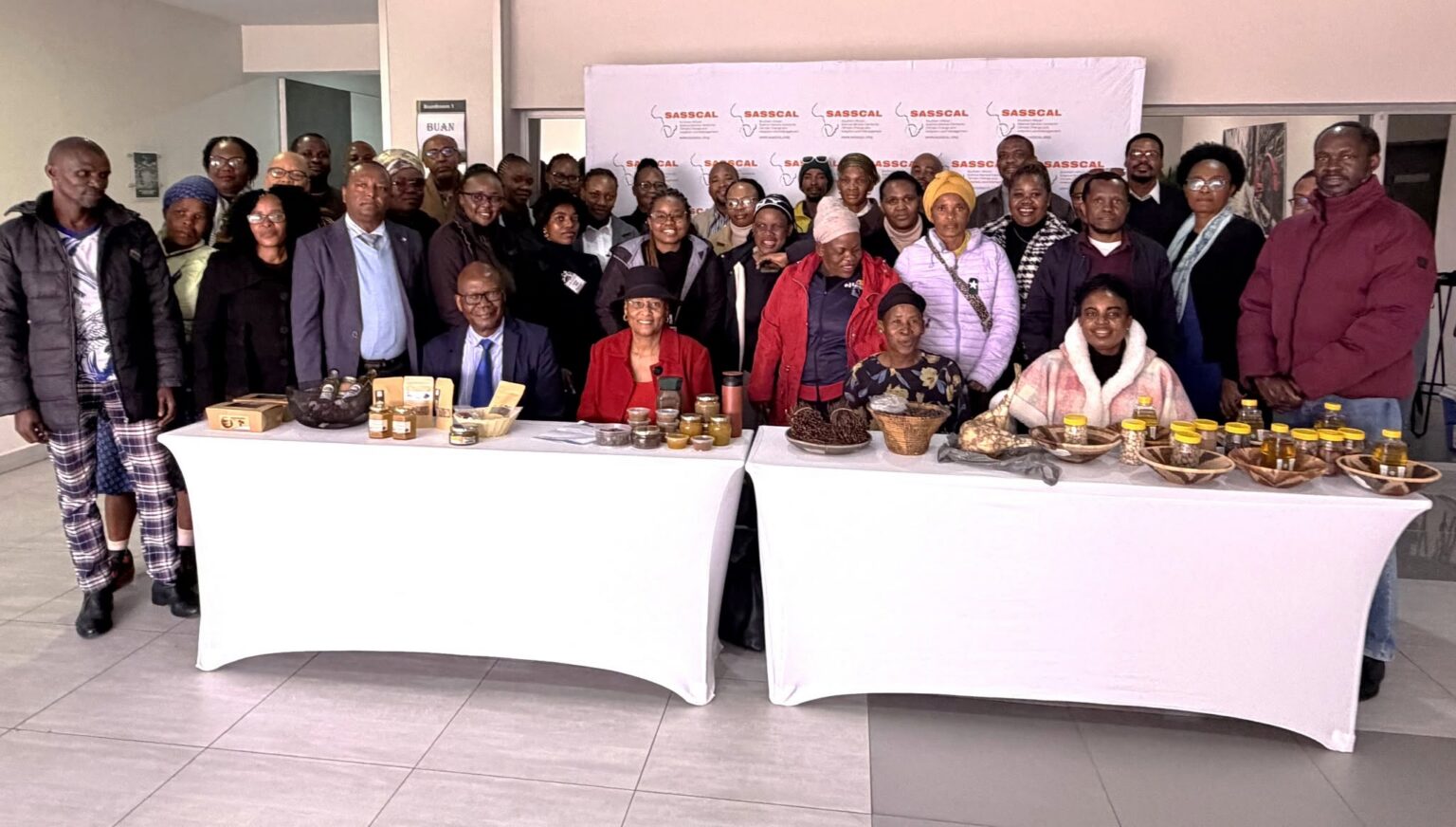
The SASSCAL Botswana Node Office has taken a leading role in advancing climate resilience and sustainable development through the dissemination of findings from two major SASSCAL 2.0 projects. These workshops, held from 23 to 24 June 2026, brought together researchers, institutions and community stakeholders to share practical solutions for climate change adaptation, biodiversity conservation and improved rural livelihoods. The events highlighted how science-based research can be translated into real-world impact across Botswana and the wider SADC region. They also reinforced the importance of collaboration between research institutions, government bodies and local communities. The workshops created a platform for knowledge exchange that connects innovation with long-term sustainability goals. This approach reflects a growing focus on applied research that directly addresses environmental and socio-economic challenges.
One of the key sessions was co-hosted by the Okavango Research Institute in Maun, where the Enhanced Livelihoods and Natural Resource Management project took centre stage. The project focused on strengthening community-based natural resource management systems in the Okavango Delta. Researchers presented findings on sustainable governance models that support both conservation efforts and local economic activity. The discussions also highlighted the role of evidence-based decision-making in improving how natural resources are managed in sensitive ecosystems. Ethnobotany research featured prominently, showing how indigenous plant knowledge can support both conservation and community development. Wildlife monitoring and ecosystem management strategies were also shared as essential tools for protecting biodiversity in the region.
The ELNAC Project emphasized the importance of integrating local communities into conservation planning. Researchers explained how community participation leads to more effective and sustainable environmental outcomes. The Okavango Delta was used as a key example of a fragile ecosystem that requires balanced management between human activity and environmental protection. Participants explored how traditional knowledge systems can complement scientific research to improve resource use. The discussions also focused on how sustainable livelihoods can be built without degrading natural ecosystems. This approach aims to ensure that conservation efforts also contribute to poverty reduction and rural development.
In Gaborone, the Climate-Smart Crops Project hosted by the Botswana University of Agriculture and Natural Resources focused on strengthening food security in the face of climate change. The project showcased how Indigenous Knowledge Systems can be combined with modern agricultural techniques to improve crop resilience. Researchers demonstrated the potential of drought-tolerant crops in supporting farmers during periods of low rainfall. The workshop also explored innovative value-added products derived from indigenous resources. These included morama and mungongo oils, kgengwe wild melon jam and mogose coffee, all of which highlight the economic potential of local biodiversity. Participants discussed how such products can be developed into sustainable eco-entrepreneurship opportunities.
The climate-smart agriculture discussions placed strong emphasis on food security and adaptation strategies for changing environmental conditions. Experts highlighted how climate variability continues to affect agricultural productivity across Botswana and the broader region. By promoting drought-resistant crops and indigenous food systems, the project aims to strengthen resilience among smallholder farmers. The use of Indigenous Knowledge Systems was presented as a critical component in designing effective agricultural responses. Participants noted that combining traditional practices with scientific innovation creates more inclusive and sustainable solutions. This integrated approach supports both nutritional security and income generation for rural communities.
Across both workshops, capacity building and knowledge transfer emerged as central themes. Stakeholders agreed that empowering local communities with skills and information is essential for long-term sustainability. The sessions also emphasized eco-entrepreneurship as a pathway for turning natural resources into sustainable business opportunities. Researchers and participants explored how value addition can increase the economic potential of indigenous products while preserving cultural heritage. The importance of preserving Indigenous Knowledge Systems for future generations was repeatedly highlighted. These discussions reinforced the idea that development strategies must balance economic growth with environmental protection.
The SASSCAL-supported initiatives demonstrate a strong commitment to addressing climate change, biodiversity loss and food insecurity through collaborative research. By connecting institutions such as ORI and BUAN with regional partners, the Botswana Node Office is helping to translate scientific knowledge into practical solutions. The outcomes of the workshops show how integrated research can support both environmental sustainability and improved livelihoods. These efforts position Botswana as an active contributor to regional climate resilience strategies within the SADC framework. The initiatives also underline the importance of continued investment in research, innovation and community engagement. Through these projects, SASSCAL continues to shape a more sustainable and resilient future for the region.