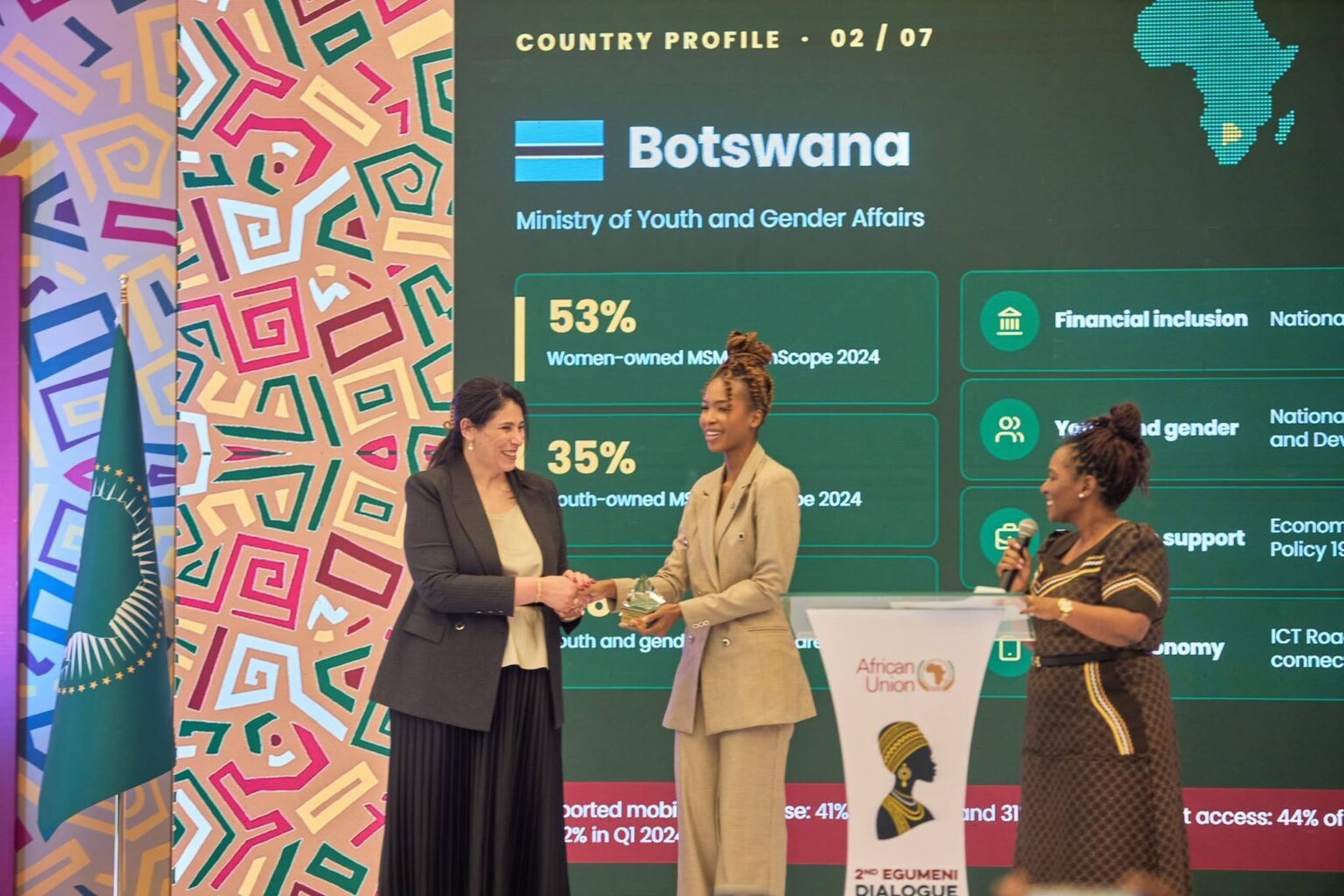
The Second Egumeni Dialogue on Gender Equality and Women’s Empowerment is taking place from 19 to 21 October 2026 in Addis Ababa, Ethiopia, bringing together leaders, policymakers and development partners to advance women’s financial and economic inclusion across Africa. Held under the theme “Building a Resilient Africa through Accelerated Women’s Financial and Economic Inclusion”, the dialogue focuses on addressing the barriers that prevent women from accessing financial services, growing businesses and participating fully in economic development. The discussions highlight the need to move beyond commitments to gender equality and implement practical solutions that expand women’s economic opportunities. Participants are examining ways to strengthen partnerships, improve access to finance and develop initiatives that can be expanded across different African countries. The dialogue also places women’s empowerment at the centre of Africa’s long-term economic resilience, recognising that inclusive growth depends on women having the resources and opportunities to contribute to their communities and national economies.
In her opening remarks, Prudence Ngwenya, Director of the African Union Commission’s Women, Gender and Youth Directorate, emphasised the importance of providing an open and frank platform for stakeholders to examine the systemic barriers affecting women’s financial and economic inclusion. She explained that the dialogue aims to encourage meaningful discussions, strengthen partnerships and identify scalable solutions capable of driving transformative change across the continent. These objectives reflect the need for coordinated action by governments, financial institutions, private sector organisations and development partners. While many African countries have introduced policies to promote gender equality, significant challenges continue to limit women’s ability to access financial services and participate equally in economic activity. The Egumeni Dialogue offers an opportunity to assess these challenges, share practical experiences and develop approaches that can deliver measurable improvements in women’s economic participation.
Delivering the keynote address under the topic “Financing Africa’s Future: Investing in Women as an Economic Imperative”, Honourable Lesego Chombo, Botswana’s Minister of Youth and Gender Affairs and Chair of the African Union’s Specialized Technical Committee on Gender Equality and Women’s Empowerment, stressed that investing in women is essential for Africa’s long-term resilience and economic growth. She emphasised that women’s economic inclusion should not be treated merely as a social obligation, but as a fundamental economic necessity. Her message highlights the connection between gender equality, productive investment and sustainable development. When women can access finance, develop businesses and participate in formal economic activities, they have greater opportunities to generate income, create employment and contribute to national development. Expanding these opportunities can also strengthen household financial security and support more inclusive economic growth across African societies.
Minister Chombo highlighted the significant contributions women already make to Africa’s economies through agriculture, trade, manufacturing, services and innovation. Women also perform essential care work that sustains households and communities, although much of this work may not receive adequate recognition in conventional economic measurements. Despite their contributions, the systems that finance economic activity do not always account for women’s circumstances or respond to their specific needs. Many women entrepreneurs struggle to obtain loans, secure investment or access financial products that support business expansion. These difficulties can prevent viable businesses from growing and limit women’s participation in sectors with greater economic opportunities. Addressing this imbalance requires financial institutions and policymakers to examine how existing systems operate and develop more inclusive approaches to financing women-led enterprises.
Structural barriers remain a major obstacle to women’s financial inclusion across Africa. Discriminatory socio-cultural norms and restrictive legal frameworks can affect women’s ability to own assets, control financial resources and make independent economic decisions. Limited access to collateral can make it difficult for women to qualify for conventional loans, particularly when lending institutions require property or other substantial assets as security. Women may also face challenges accessing savings products, insurance and digital financial services that could help them manage risks and expand their businesses. These barriers are often more pronounced for women in informal employment, rural communities and underserved markets. Removing them requires a combination of legal reform, financial education, inclusive lending practices and policies that support women’s economic independence.
The scale of the financing challenge was highlighted through the estimate cited by Minister Chombo that women-owned businesses in Africa face a financing gap of approximately $42 billion, attributed to the African Development Bank. This figure illustrates the difficulty many women entrepreneurs experience when seeking the capital required to establish, maintain or expand their businesses. Access to finance can determine whether a small enterprise can purchase equipment, increase production, hire workers or enter new markets. Without suitable funding, even businesses with strong commercial potential may struggle to grow beyond their initial operations. Young women entrepreneurs face additional difficulties because they may lack established credit histories, sufficient collateral or long-standing relationships with financial institutions. Addressing the financing gap will therefore require solutions that reflect the different needs of women at various stages of business development.
Improving access to finance also involves looking beyond traditional bank loans. Financial institutions can explore financing arrangements that better reflect the realities of small businesses and entrepreneurs who operate without substantial fixed assets. Savings products, insurance, digital payment systems and other financial services can help women manage income, protect businesses against risks and build stronger financial records. Digital financial services may also reduce some of the practical barriers associated with accessing physical banking facilities, particularly in communities with limited financial infrastructure. However, technology alone cannot resolve every challenge, as access to digital services also depends on affordability, connectivity, digital skills and appropriate consumer protections. A comprehensive approach to women’s financial inclusion must therefore combine accessible financial products with supportive policies and practical business development services.
Minister Chombo also highlighted interventions in Botswana that seek to address challenges faced by women entrepreneurs and women in the workplace. These include the EntreprenHER programme involving the Government of Botswana, De Beers and UN Women, alongside gender-responsive public procurement reservations. Such initiatives can help create opportunities for women to develop businesses, access markets and strengthen their participation in economic activity. Public procurement measures are particularly relevant because government purchasing can provide a route for eligible women-owned enterprises to secure contracts and build a track record with larger customers. For these measures to deliver lasting benefits, women entrepreneurs need access to information about procurement opportunities, the capacity to meet contract requirements and suitable financing to fulfil orders. Effective implementation and monitoring are therefore important in determining how far these interventions translate into sustainable business growth.
The minister also referred to recently enacted legislative frameworks addressing workplace harassment and developments concerning gender-based violence. These issues are closely connected to women’s economic participation because safe working environments and protection from violence are essential for women to pursue employment, operate businesses and exercise their economic rights. Workplace harassment can undermine career progression, reduce productivity and discourage women from remaining in particular industries. Gender-based violence can also disrupt education, employment and business activities, creating consequences that extend beyond individual households. Legal protections, effective enforcement and access to support services can help create conditions in which women participate more fully in economic life. Continued attention to these issues forms part of a broader effort to connect gender equality with economic opportunity and personal security.
Across the dialogue, speakers, leaders and partner institutions emphasised the need to accelerate implementation of the African Union’s Women and Youth Financial and Economic Inclusion initiative, known as WYFEI 2030. The initiative aims to unlock $100 billion in economic opportunities for at least 10 million African women and young people by 2030. Its ambition reflects the recognition that expanding access to finance and economic opportunities requires coordinated action at continental, national and institutional levels. Achieving these targets will depend on effective partnerships, suitable financial products, investment in enterprise development and policies that remove barriers to participation. Governments and development partners also need to ensure that women and young people can access opportunities across different sectors and stages of business growth. The initiative provides a shared framework for aligning efforts around measurable economic inclusion goals.
Accelerating WYFEI 2030 will require more than setting ambitious targets. Governments must translate continental priorities into national programmes that respond to local economic conditions and the specific challenges facing women and young entrepreneurs. Financial institutions need to assess whether their lending requirements and service models allow viable women-owned businesses to access appropriate funding. Private sector organisations can contribute through investment, supplier development programmes, mentorship and stronger links between small enterprises and larger markets. Development partners can support implementation through technical assistance, capacity building and efforts to improve the availability of financing. Regular monitoring will also be important to assess progress, identify gaps and ensure that commitments produce practical results for the intended beneficiaries.
The Second Egumeni Dialogue is expected to produce priority actions, institutional commitments and follow-up measures designed to accelerate women’s financial and economic inclusion. These outcomes will be important in determining how discussions translate into concrete changes across the continent. Clear responsibilities, realistic implementation timelines and effective monitoring can help participating institutions maintain momentum after the dialogue concludes. Cooperation among governments, financial institutions, businesses and civil society organisations will be necessary to address challenges that no single institution can resolve independently. The expected follow-up measures are also intended to catalyse implementation of the WYFEI Acceleration Plan and strengthen efforts to expand economic opportunities for women and youth. The impact of the dialogue will ultimately depend on the extent to which its recommendations lead to improved access to finance, stronger enterprises and greater participation in economic activity.
The Second Egumeni Dialogue on Gender Equality and Women’s Empowerment highlights a central challenge facing Africa’s development agenda: women contribute substantially to economic activity, yet many continue to face barriers that restrict their access to finance, markets and secure employment. Minister Lesego Chombo’s keynote address reinforced the need to recognise investment in women as a driver of economic resilience rather than simply a matter of social responsibility. Botswana’s interventions, alongside the African Union’s WYFEI 2030 initiative, demonstrate the importance of combining national action with continental cooperation. Closing the financing gap will require inclusive financial systems, effective legal protections, stronger partnerships and sustained support for women-led businesses. By turning commitments into practical and measurable action, African countries can expand women’s economic opportunities, strengthen local enterprises and build more resilient economies for future generations.