
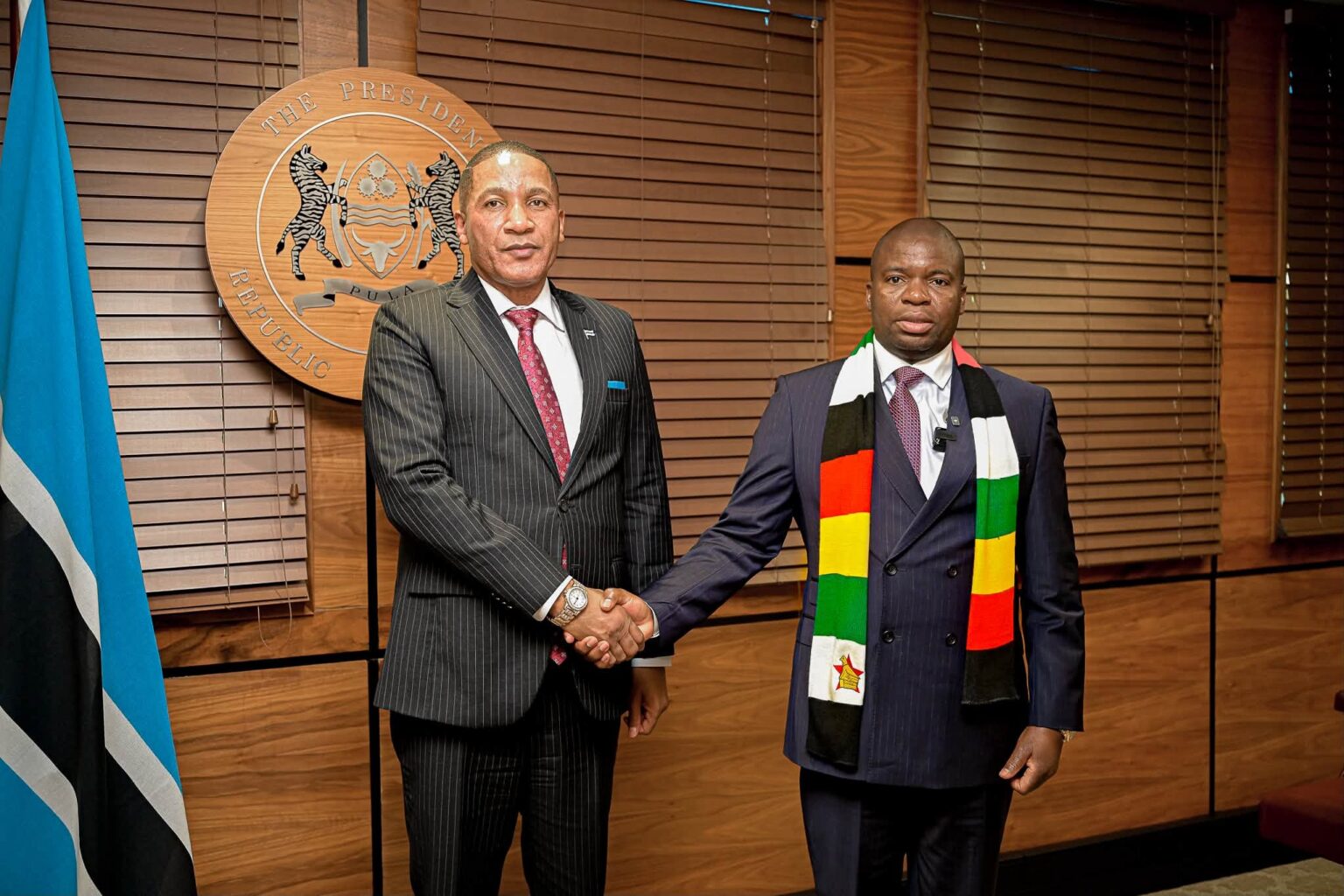
Botswana and Zimbabwe are strengthening regional cooperation on waste management and environmental sustainability following the signing of a Memorandum of Understanding (MOU) between the two countries. President Advocate Duma Gideon Boko welcomed a delegation from Zimbabwe’s Geo Pomona Waste Collection Company (Pvt) Ltd, led by its Chief Executive Officer and Executive Chairman, Dr Dilesh Nguwaya, during an engagement focused on addressing shared environmental challenges. The meeting culminated in an agreement designed to encourage knowledge sharing, technical cooperation and the adoption of innovative waste management practices. The partnership aims to explore ways to improve waste collection, strengthen institutional capacity and promote cleaner communities across the region. It also highlights the growing importance of treating waste as a potential economic resource that can support job creation, environmental protection and healthier living conditions.
The signing of the MOU marks an important step in efforts to strengthen cooperation between Botswana and Zimbabwe on environmental management. The agreement was signed by Acting Permanent Secretary Ms Tshepho Kebakile and Dr Nguwaya in the presence of President Boko, the Minister of Local Government and Traditional Affairs, Honourable Ketlhalefile F.C. Motshegwa, and other senior government officials. The participation of government representatives reflects the importance of cooperation between public institutions and organisations with experience in waste collection and management. Although the agreement establishes a framework for collaboration, its practical impact will depend on how the parties translate their commitments into programmes, technical exchanges and measurable improvements. The initiative creates an opportunity for both countries to share expertise and explore solutions suited to their environmental needs and local circumstances.
President Boko emphasised the importance of regional partnerships in addressing environmental problems that affect communities across national borders. Waste management is a growing concern for towns and cities as populations expand, consumption increases and pressure on public services rises. Poorly managed waste can contribute to pollution, block drainage systems, attract pests and create health risks for nearby communities. Addressing these challenges requires reliable collection services, suitable disposal facilities, effective public education and consistent enforcement of environmental standards. By encouraging cooperation with Zimbabwe, Botswana can explore approaches that may strengthen its own waste management systems while contributing to wider regional efforts to protect the environment. The partnership also reflects the value of sharing practical knowledge instead of relying exclusively on individual national approaches to common problems.
Knowledge sharing and technical cooperation are central to the purpose of the agreement. Countries and organisations often develop different methods for collecting, sorting, transporting, recycling and disposing of waste, depending on their infrastructure, budgets and local needs. Sharing experience can help identify practices that improve efficiency, reduce operating costs and limit environmental damage. Cooperation may also provide opportunities for technical staff and relevant institutions to exchange information about equipment, operational procedures, service delivery and public awareness programmes. However, approaches that work in one location may require adjustment before they can be applied elsewhere because local conditions, regulations and available resources differ. The value of the Botswana-Zimbabwe partnership will depend on selecting practical solutions that meet the needs of communities while remaining financially and environmentally sustainable.
The MOU also highlights the potential to transform waste into an economic resource. Traditionally, waste management has often focused on collecting unwanted materials and transporting them to disposal sites, but some waste can be recovered, reused or processed into useful products. Recycling can return materials such as paper, glass, metals and certain plastics to productive use, reducing the need for some new raw materials. Organic waste can also be suitable for composting or other treatment methods when facilities and operating conditions support safe processing. These activities can create opportunities for businesses involved in collection, sorting, processing and the sale of recovered materials. By exploring waste recovery and other resource-efficient practices, Botswana and Zimbabwe could help reduce the volume of waste sent for final disposal while developing additional economic activities.
Turning waste into an economic resource requires careful planning, investment and reliable systems. Waste must be collected regularly and separated appropriately if valuable materials are to be recovered efficiently. Recycling and processing facilities need suitable equipment, trained workers, dependable transport and access to markets for the materials they produce. Without these supporting conditions, waste recovery initiatives may struggle to cover their costs or maintain consistent operations. Governments and private sector organisations can work together to assess which materials are available, identify viable uses and establish systems that reduce contamination and improve recovery rates. The MOU provides an opportunity to explore such approaches, although specific projects, investment commitments and implementation timelines have not been detailed in the announcement.
Job creation is another potential benefit of stronger cooperation on waste management. Waste collection, recycling, sorting, composting and materials processing can support employment at different skill levels. Small businesses may find opportunities in collecting recyclable materials, supplying equipment, providing transport services or developing products from recovered resources. Larger operations can create demand for technical workers, logistics services, maintenance and environmental management expertise. If waste recovery systems become commercially viable, they may also support entrepreneurship and provide new income opportunities for communities. These benefits are not automatic, however, and depend on the availability of markets, suitable infrastructure, effective regulation and business models that can operate over the long term.
Improved waste management can also contribute to public health and environmental protection. Uncollected rubbish can contaminate land and water, create unpleasant living conditions and increase the risk of exposure to harmful substances. Open burning of waste can release pollutants, while poorly managed disposal sites can create further environmental problems. Effective collection services and appropriate treatment methods can help reduce these risks and improve the quality of life in residential areas. Public education is equally important because residents and businesses influence how waste is stored, separated and discarded. Through cooperation and the exchange of practical experience, Botswana and Zimbabwe can explore ways to strengthen waste management practices while encouraging greater public participation in keeping communities clean.
The partnership also draws attention to the role of local government in delivering environmental services. Municipal authorities and other relevant institutions often oversee waste collection, public cleanliness and aspects of local environmental management. Their ability to perform these responsibilities depends on adequate funding, trained personnel, equipment and effective operational planning. Cooperation with organisations experienced in waste collection could provide opportunities to examine service delivery methods and identify areas where existing systems can improve. Strong institutional capacity is particularly important because waste management involves regular operations rather than occasional clean-up campaigns. Any lasting progress will require clear responsibilities, appropriate oversight and continued coordination between national authorities, local institutions and service providers.
Regional cooperation between Botswana and Zimbabwe could also encourage a more coordinated approach to environmental sustainability in Southern Africa. Both countries face the challenge of balancing economic development with the need to protect natural resources and maintain healthy communities. Sharing technical knowledge can help public institutions and private organisations understand different approaches to waste collection, recycling and disposal. Regional engagement may also create opportunities to identify common training needs and explore partnerships in environmental technology. At the same time, each country must ensure that any adopted practices comply with its laws, regulations and environmental requirements. The success of this cooperation will depend on practical implementation and the ability to adapt shared knowledge to local priorities.
The involvement of Geo Pomona Waste Collection Company brings a private sector dimension to the agreement. Waste management requires operational expertise and can involve significant investment in vehicles, collection systems, processing facilities and trained personnel. Private companies may contribute technical knowledge and service delivery experience, while governments remain responsible for setting policy, maintaining oversight and protecting the public interest. Clear agreements are important to establish the scope of cooperation, define responsibilities and ensure that environmental and financial risks receive appropriate attention. Transparency and measurable performance standards can also help determine whether waste management initiatives deliver the intended benefits. The announcement establishes a basis for collaboration, but further details would be needed to assess the specific services, projects or investments that may emerge from the MOU.
For Botswana, the agreement comes amid broader efforts to strengthen environmental sustainability and improve the management of waste in communities. More effective systems could help reduce litter, improve public spaces and encourage responsible use of resources. They could also support a shift towards a circular economy, an approach that aims to keep materials in use for as long as practical through reuse, repair, recycling and recovery. This approach can reduce waste while creating opportunities for businesses that supply recycled materials or develop products from recovered resources. Achieving these outcomes requires cooperation across the entire waste chain, from households and businesses to collectors, processors and regulators. The partnership with Zimbabwe offers a framework for exploring how shared knowledge and technical experience can support these objectives.
The MOU signed following President Duma Boko’s engagement with the Geo Pomona delegation represents an opportunity to deepen Botswana-Zimbabwe cooperation on waste management and environmental sustainability. By promoting knowledge exchange, institutional capacity and innovative waste recovery methods, the partnership aims to address environmental challenges while exploring opportunities for economic development. Its potential benefits include cleaner communities, improved resource use, new business activities and employment opportunities linked to waste collection and processing. Realising these benefits will require clear implementation plans, appropriate investment and consistent cooperation between government institutions and relevant private sector organisations. Ultimately, the agreement highlights an important principle for sustainable development in the region: waste management should be treated not only as a public service responsibility but also as an opportunity to protect the environment, support livelihoods and make better use of available resources.