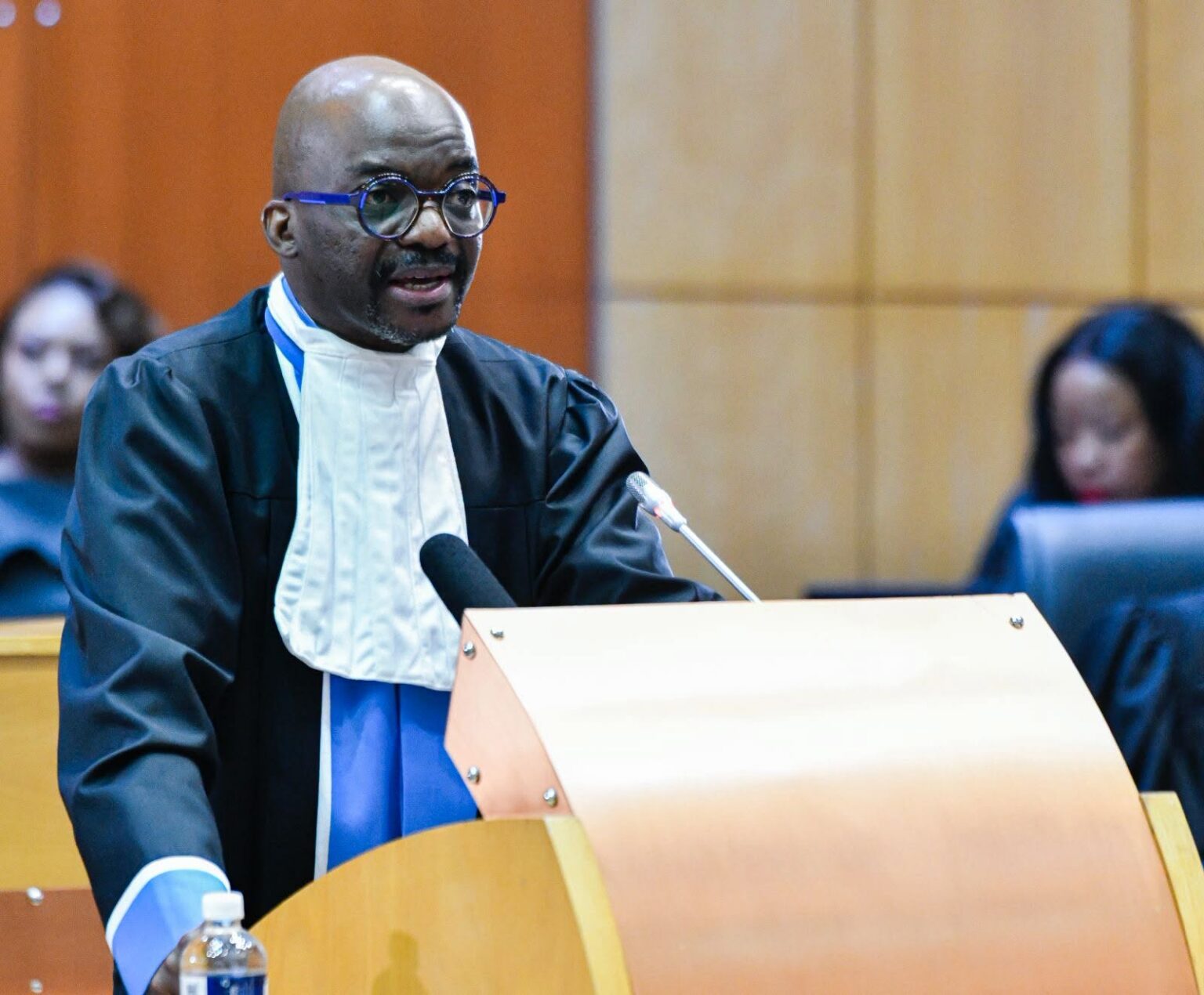
Botswana’s Parliament has entered a new era following the formal opening of the Third Meeting of the Second Session of the 13th Parliament by Speaker Dithapelo Keorapetse. The landmark ceremony was significant not only because it marked the beginning of a new legislative period but also because it introduced an ambitious vision to transform Parliament into a more independent, inclusive and citizen-centered institution. For the first time since Botswana gained independence, Parliament officially opened its legislative business through a standalone ceremony that was separate from the State of the Nation Address and the national Budget Speech. The historic event signaled a shift in how the country’s legislative institution defines its role within Botswana’s democratic system. It also reflected a growing commitment to strengthening parliamentary independence and improving governance.
The decision to establish a dedicated parliamentary opening ceremony represents an important institutional development for Botswana. Traditionally, Parliament’s formal opening has been closely associated with executive government events such as the President’s State of the Nation Address or the presentation of the national budget. By creating an independent opening ceremony, Parliament is reinforcing its own identity as a separate arm of government with distinct constitutional responsibilities. Speaker Keorapetse explained that implementing the new tradition did not require amendments to Parliament’s Standing Orders but simply the political will to establish it. He acknowledged the cooperation of both the Leader of the House and the Leader of the Opposition for making the historic occasion possible.
In his address, Speaker Keorapetse emphasised the importance of Parliament operating as an institution that is equal to the Executive rather than subordinate to it. He stated that Parliament should not function as an appendage of the Executive but instead as a co-equal branch of government that is operationally independent and constitutionally empowered. This vision aligns with the democratic principle of separation of powers, where the Executive, Legislature and Judiciary each perform distinct roles while providing checks and balances on one another. A stronger and more independent Parliament can improve oversight, strengthen accountability and ensure that government policies receive thorough scrutiny before implementation. Such reforms are regarded as essential for deepening Botswana’s democratic institutions.
Speaker Keorapetse also reflected on Botswana’s historic 2024 general elections, which resulted in the country’s first peaceful transfer of political power since independence. He described the election as clear evidence of Botswana’s democratic maturity and the strength of its constitutional processes. Peaceful transfers of power are widely recognised as important indicators of a healthy democracy because they demonstrate public confidence in electoral institutions and respect for democratic outcomes. However, the Speaker cautioned that democracy cannot be taken for granted. He reminded Members of Parliament that democratic governance requires constant protection, continuous improvement and a shared commitment to constitutional values.
Central to the Speaker’s address was a comprehensive reform agenda designed to modernise Parliament and improve its effectiveness. One of the most significant proposals involves establishing an autonomous Parliamentary Services Commission that would strengthen Parliament’s operational independence. Such a commission would provide greater administrative autonomy and reduce dependence on executive structures for day-to-day institutional management. Increased independence would allow Parliament to manage its own affairs more effectively while strengthening its ability to fulfil its constitutional mandate. Institutional reforms of this nature are intended to improve efficiency while reinforcing public confidence in the legislative process.
Another important proposal is the creation of a Parliamentary Budget Office to strengthen Parliament’s financial oversight capacity. Speaker Keorapetse highlighted that Parliament currently receives only 0.2 percent of the national budget, limiting its ability to perform its expanding responsibilities effectively. A dedicated Budget Office would provide Members of Parliament with independent financial analysis and expert advice when reviewing government spending plans. Better access to financial expertise would enhance legislative scrutiny of budgets, public expenditure and fiscal policy. Strengthening Parliament’s financial capacity is viewed as an important step toward improving transparency and accountability in public finance.
The Speaker also called for strengthening Parliament’s legislative capacity by increasing professional support available to Members of Parliament. He noted that the institution currently operates with only two lawyers despite handling increasingly complex legislation and constitutional matters. Expanding legal expertise would improve the quality of legislative drafting, policy analysis and legal review during the lawmaking process. Better technical support would enable Members to examine proposed legislation more thoroughly before it becomes law. Investing in professional capacity is expected to strengthen Parliament’s effectiveness while improving the overall quality of legislation.
Promoting greater inclusivity formed another important element of the proposed reform agenda. Speaker Keorapetse highlighted the need to improve female representation within Parliament, where women currently occupy only 8.7 percent of seats. Increasing women’s participation in legislative decision-making would create a Parliament that better reflects Botswana’s population and diversity. He also proposed expanding the number of Members of Parliament to at least 100 in order to improve representation and respond to the country’s evolving governance needs. Broader representation can strengthen democracy by ensuring that more communities and perspectives participate in national decision-making.
The reform programme further includes modernising Parliament’s Standing Orders, introducing a Public Participation Law and adopting a binding Code of Conduct for Members of Parliament. Updating procedural rules would help Parliament operate more efficiently while responding to modern legislative demands. A Public Participation Law would encourage greater involvement by citizens in the legislative process, allowing communities to contribute more directly to national policymaking. Meanwhile, a binding Code of Conduct would establish clear ethical standards for Members, promoting integrity, accountability and professionalism within the institution. Together, these reforms seek to strengthen public trust while improving parliamentary governance.
While acknowledging existing institutional challenges, Speaker Keorapetse also celebrated several significant achievements accomplished during the current Parliament. He noted that Parliament has passed 53 bills within just 20 months, demonstrating substantial legislative productivity. He also highlighted strategic partnerships that have secured millions of pula to support parliamentary capacity building and institutional development. In addition, the launch of the “Bridging the Gap” project with civil society organisations reflects Parliament’s commitment to strengthening engagement with citizens and promoting greater public participation. These achievements demonstrate ongoing efforts to modernise the institution while building stronger relationships between Parliament and the communities it serves.
The Speaker concluded his remarks by encouraging Members of Parliament to place national interests above political differences whenever necessary. He reminded legislators that the authority they exercise is entrusted to them by the people and should always be used responsibly. His call for constructive leadership reinforced the principle that effective governance requires cooperation even in a politically competitive environment. Opposition Leader Dumelang Saleshando echoed this message during his address by pledging constructive engagement throughout the parliamentary session. He stated that the opposition would scrutinise government actions without hostility, criticise without malice and cooperate without compromising principle, while also announcing six private member’s bills ready for parliamentary consideration.
The opening of the Third Meeting of the Second Session of the 13th Parliament marks a defining moment in Botswana’s democratic journey. The establishment of Parliament’s first standalone opening ceremony since independence symbolises a stronger and more independent legislative institution committed to serving the public interest. Speaker Dithapelo Keorapetse’s ambitious reform agenda outlines a clear vision for enhancing institutional independence, improving legislative capacity, expanding public participation and strengthening democratic accountability. Supported by a spirit of constructive engagement from both government and opposition, the proposed reforms have the potential to reshape Botswana’s Parliament into a more effective, transparent and citizen-focused institution. As the country continues to build on its democratic achievements, these reforms could help ensure that Parliament remains responsive to the needs and aspirations of the people it represents.