
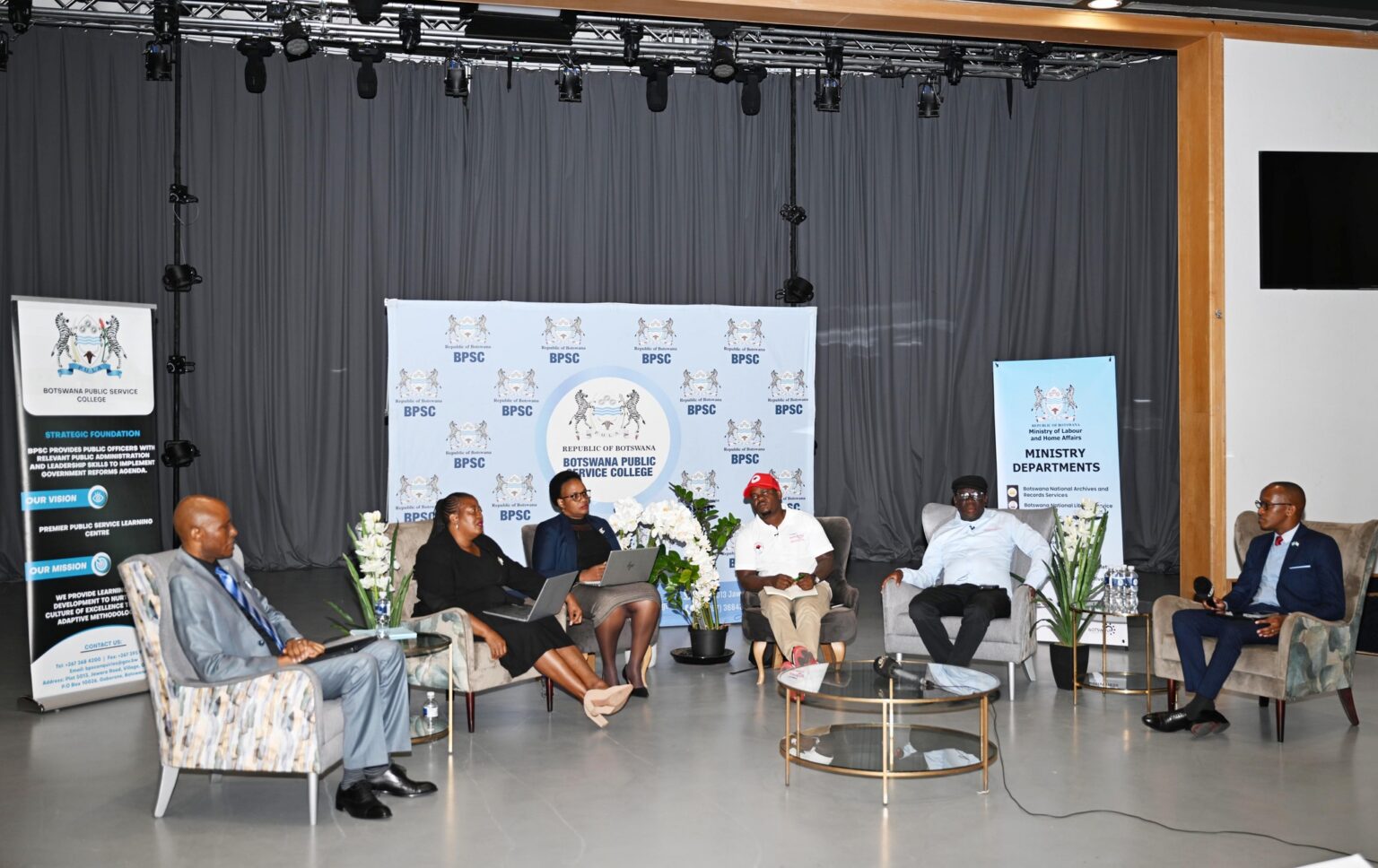
The Botswana Public Service College has officially launched its Talks, Seminars and Symposia Programme with a strong focus on one of the most pressing issues affecting modern workplaces, workplace bullying. The programme opened with a panel discussion titled “Promoting Dignity at Work: Identifying, Preventing and Responding to Workplace Bullying,” bringing together leaders from government, labour organisations and the private sector. The launch marked an important step for the college as it expands its role beyond traditional public service training into a platform for national conversations and professional development. The initiative reflects a growing recognition that healthy work environments are essential for effective public institutions and productive employees. It also signals Botswana’s commitment to building workplaces that value respect, fairness and human dignity.
In his opening remarks, BPSC Executive Director Kitso Kemoeng described the programme as a major milestone for the institution. He explained that the Botswana Public Service College is positioning itself as a national convener of ideas that encourages continuous learning and professional dialogue across the public service. According to Kemoeng, the college wants to become a centre for thought leadership where difficult workplace issues can be discussed openly and constructively. He stressed that public institutions need spaces where employees, experts and leaders can exchange ideas that improve governance and strengthen ethical standards. His remarks highlighted the importance of collaboration in shaping a public service that responds effectively to the needs of citizens.
The panel discussion brought together a diverse group of experts and stakeholders from organisations that play key roles in labour relations and workforce management in Botswana. Participants included representatives from the Directorate of Public Service Management, Business Botswana, the Commissioner of Labour, the Botswana Federation of Public, Private & Parastatal Sector Unions and the Botswana Federation of Trade Unions. Their participation demonstrated a shared concern about the impact of workplace bullying on employees and institutions. The discussion created an opportunity for different sectors to share experiences and propose practical solutions to a problem that often remains hidden in many workplaces. Panellists agreed that addressing bullying requires cooperation between employers, employees, unions and policymakers.
Throughout the discussion, speakers highlighted the serious emotional and professional consequences of workplace bullying. They explained that bullying damages mental health, weakens confidence and often forces skilled employees to leave their jobs earlier than expected. Experts noted that many victims suffer in silence because they fear victimisation, career setbacks or isolation from colleagues. The panel also explored how toxic leadership styles and unequal power dynamics contribute to abusive workplace cultures. Gender imbalances in positions of authority were identified as another factor that can increase vulnerability and limit opportunities for victims to report unfair treatment safely.
Panellists also pointed to weaknesses in Botswana’s current labour laws and workplace protection systems. They argued that existing legislation does not provide enough protection for employees facing workplace bullying and harassment. Calls were made for amendments to the Employment Act to address modern workplace challenges more effectively. Speakers emphasised the need for stronger grievance procedures that allow complaints to be handled fairly, confidentially and without intimidation. They also stressed that policies alone are not enough if organisations fail to implement them properly or if employees remain unaware of their rights and available support systems.
The discussions made it clear that workplace bullying is not only a personal issue but also an organisational challenge that affects productivity and service delivery. Panellists explained that bullying weakens teamwork, lowers morale and reduces trust between employees and management. When workers feel unsafe or disrespected, institutions struggle to maintain efficiency and professionalism. Experts warned that organisations that ignore bullying risk losing experienced employees and damaging their reputations. They agreed that strong institutional performance should never come at the expense of human dignity or employee wellbeing.
The new Talks, Seminars and Symposia Programme launched by the Botswana Public Service College is expected to become an important platform for continued engagement on issues affecting the public sector. The programme aims to encourage national dialogue, strengthen strategic partnerships and promote ethical leadership across government institutions. By creating spaces for honest conversations, the college hopes to support reforms that improve workplace culture and accountability. The initiative also reflects a broader effort to build a citizen-centred public service that values professionalism, transparency and respect. As discussions continue under this programme, the focus on dignity at work may help shape stronger policies and healthier working environments across Botswana’s public and private sectors.