
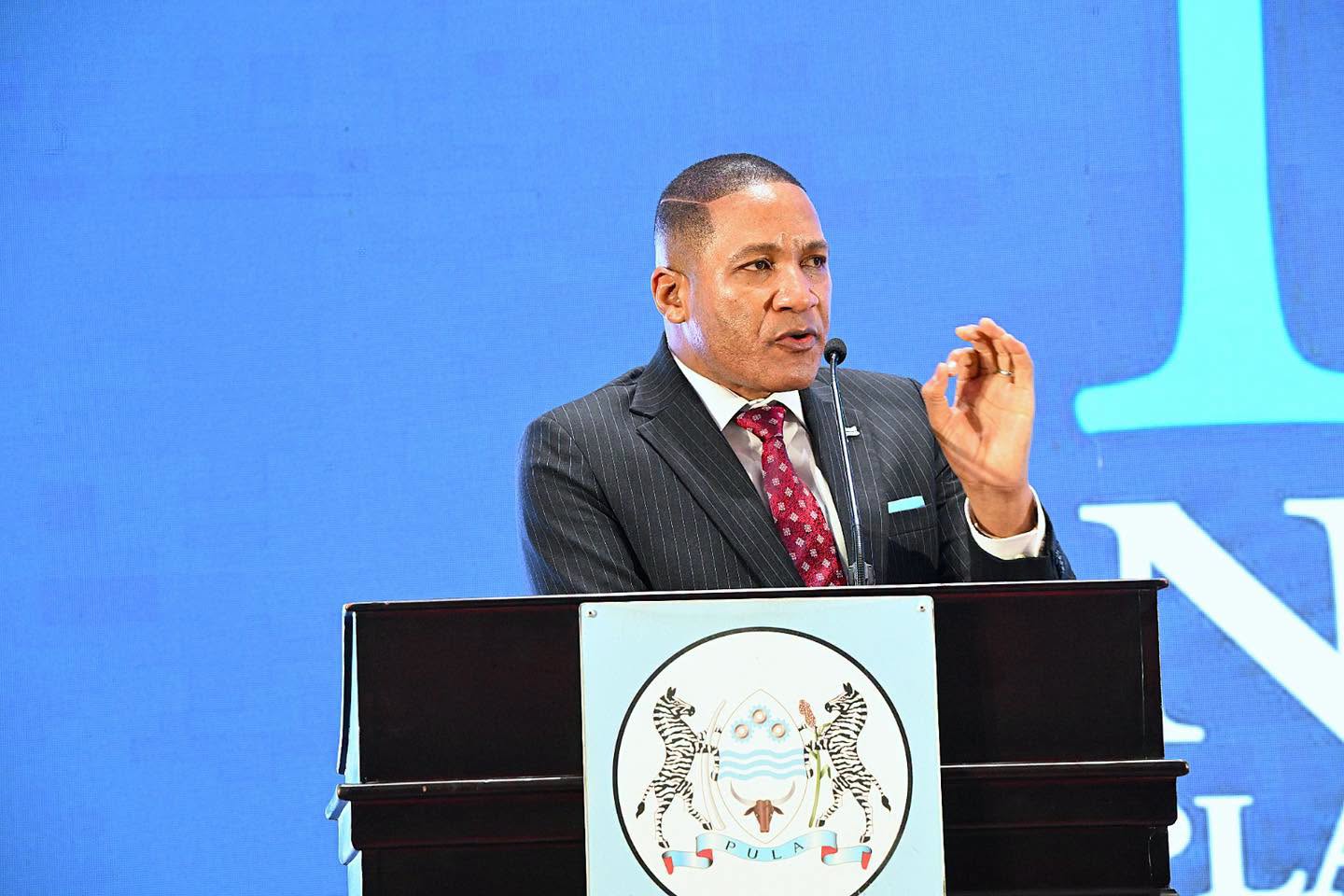
Botswana is renewing efforts to diversify its economy beyond diamonds by strengthening cooperation between the government and the private sector, with mining, manufacturing, agribusiness and technology identified as key areas for future growth. At the Second Presidential Business Roundtable, President Duma Boko called for practical reforms to remove investment barriers, improve access to finance and encourage businesses to expand into productive industries. The discussions focused on the need to reduce reliance on government procurement and imported goods while creating more opportunities for local companies to manufacture products, develop new ideas and generate sustainable employment. Vice President Ndaba Gaolathe reinforced this message, emphasising that Botswana must direct more capital towards industries that can support long-term economic growth rather than consumption alone. The meeting highlighted a central challenge for Botswana’s economic future, turning its financial resources, natural wealth and entrepreneurial talent into a broader range of competitive local industries.
Economic diversification has remained an important priority for Botswana because of the significant role diamonds have played in national revenue, exports and economic activity. Although the diamond industry has contributed to the country’s development, dependence on a single major export sector can leave the economy exposed to changes in global demand, prices and production levels. Expanding other industries could help create additional sources of income, strengthen domestic supply chains and provide more employment opportunities for citizens. The government’s renewed engagement with businesses reflects an understanding that economic transformation requires more than policy announcements. It also depends on practical changes that make it easier for companies to invest, access financing, acquire suitable land and compete in local and international markets. The focus of the Presidential Business Roundtable was therefore on identifying obstacles that prevent businesses from growing and finding ways for government and industry to address them together.
President Duma Boko stressed that the government and private sector must work as partners if Botswana is to expand economic activity outside the diamond industry. He called for reforms that would remove barriers discouraging investment and limiting the growth of non-diamond gross domestic product. His remarks placed particular emphasis on the conditions businesses face when attempting to establish operations, expand production or introduce new products. Companies need predictable procedures, access to suitable infrastructure and efficient public services to make investment decisions with confidence. When administrative delays and regulatory difficulties increase operating costs, businesses may postpone expansion or struggle to compete. By improving the business environment, Botswana aims to create conditions that support entrepreneurship, attract investment and encourage companies to contribute more directly to national economic growth.
One of the major challenges identified by Boko was the delay in issuing secure land title documents. Access to formally documented property can play an important role in business financing because lenders may accept eligible property as collateral for loans. When businesses cannot obtain the necessary title documents within a reasonable period, they may struggle to secure the funding needed to purchase equipment, expand facilities or increase production. This problem can affect small and medium-sized enterprises in particular, as they may have fewer alternative sources of capital than larger companies. Improving land administration could therefore help remove a practical obstacle to business development and make it easier for eligible entrepreneurs to use their assets to support investment. However, better access to title documents would need to work alongside responsible lending practices and clear property rules to ensure that financing supports viable business activity.
Boko also called for faster digitalisation of government services to improve efficiency and reduce the cost of doing business in Botswana. Digital public services can help companies complete administrative processes more quickly, reduce the need for repeated office visits and make information easier to access. Depending on how systems are designed and implemented, online platforms can also improve communication between government departments and businesses. For entrepreneurs, fewer delays can mean lower administrative expenses and more time to focus on production, sales and customer service. Effective digitalisation requires reliable systems, secure data management, accessible services and support for users who may have limited digital skills. If these conditions are addressed, government digital transformation could become an important part of Botswana’s efforts to improve productivity and attract private investment.
Another priority raised during the meeting was the need to reduce Botswana’s dependence on government procurement and imported goods. Public procurement can provide important business opportunities, but an economy that relies too heavily on government contracts may struggle to develop a broad base of independent private sector demand. Similarly, importing a wide range of goods can leave local businesses with fewer opportunities to build production capacity and develop domestic supply chains. Boko encouraged a stronger focus on local manufacturing, innovation and intellectual property creation as ways to broaden economic participation. This approach would involve supporting businesses that can produce goods locally, develop specialised services and create products with commercial value. Building these capabilities could help Botswana retain more economic activity within the country while giving local companies opportunities to compete beyond the domestic market.
Manufacturing is one of the sectors that could contribute to Botswana’s economic diversification by creating jobs and adding value to raw materials. Local production can reduce reliance on certain imported goods while encouraging investment in machinery, technical skills, logistics and industrial infrastructure. Businesses operating in manufacturing also create demand for supporting services, including transport, maintenance, packaging and professional expertise. However, expanding the sector requires more than encouraging companies to open factories. Manufacturers need reliable electricity and water, suitable industrial land, affordable financing, skilled workers and access to markets large enough to support production. Botswana’s ability to grow manufacturing will therefore depend on whether government reforms and private sector investment can address these practical requirements while helping local products remain competitive on quality and price.
Agribusiness was also identified as a key area for future growth. Developing agricultural production and related industries could create opportunities in food processing, storage, packaging, distribution and agricultural services. Stronger domestic supply chains could help businesses add value to agricultural products before they reach consumers, rather than relying solely on the sale of unprocessed goods or imported food products. Agribusiness can also support employment across different parts of the economy, including rural communities where agricultural activities provide livelihoods. To unlock this potential, businesses may require access to finance, appropriate technology, reliable water supplies, transport networks and stable markets. Investment in these areas could help Botswana develop a more productive agricultural sector and expand commercial opportunities beyond mining.
Mining remains an important part of Botswana’s economy, but the diversification agenda also creates an opportunity to expand activity around the wider mining value chain. Mining-related businesses can provide equipment, maintenance, engineering, logistics, technical services and other products required by large operations. Developing local suppliers could allow more spending associated with mining to support businesses and workers within Botswana. The sector may also offer opportunities for technical training and the development of specialised expertise that can be used in other industries. At the same time, mining diversification should not be confused with continued dependence on mineral extraction alone. The broader objective is to build a wider economic base in which mining contributes to national development while other industries develop the capacity to generate income and employment independently.
Technology and innovation formed another important part of the discussions. A stronger technology sector could support businesses across manufacturing, agriculture, mining, financial services and public administration. Digital tools can help companies improve productivity, manage inventory, reach customers and develop new services, while technology-based businesses can create employment for people with specialised skills. Intellectual property creation is also relevant because original software, designs, inventions and other commercially valuable ideas can help businesses establish products and services that stand out in competitive markets. For Botswana to benefit from these opportunities, entrepreneurs need access to relevant training, reliable digital infrastructure, financing and business support. Policies that encourage innovation and help businesses commercialise ideas could contribute to a more diverse economy with greater capacity to adapt to changing market conditions.
Vice President Ndaba Gaolathe said the Presidential Business Roundtable was intended to move beyond traditional discussions and produce practical solutions to the challenges facing businesses. His comments highlighted the importance of converting consultation into action by identifying specific problems, reviewing existing rules and improving the way government engages with investors. Gaolathe said the government was reviewing domestic investment rules and exploring ways to direct capital towards productive sectors instead of consumption-driven lending. This approach reflects concern about how available financial resources are used within the economy. Money that supports business expansion, industrial production and innovation can help build productive capacity, while lending concentrated on consumption may do less to increase the economy’s ability to produce goods and services over time. The challenge is to create financial conditions that encourage sound investment without restricting access to appropriate credit for households and viable businesses.
Gaolathe described the goal as moving Botswana away from structural excess liquidity and consumer-led lending towards productive, high-impact sectors, including mining, agribusiness, manufacturing and technology. Excess liquidity refers broadly to a situation in which financial institutions hold more available funds than they can deploy through suitable lending or other productive investments under prevailing conditions. The presence of available capital does not automatically mean businesses can access the funding they need. Lenders must assess risk, borrowers must meet financing requirements and viable investment opportunities must exist. If businesses face difficulties obtaining land titles, securing credit or navigating administrative procedures, available money may not flow easily into productive projects. Reviewing investment rules and addressing these barriers could help connect capital with businesses that have the potential to expand production, improve productivity and create jobs.
The Vice President also pledged a more responsive approach from government, saying, “State leadership will talk less and listen more.” The statement emphasised the need for government to engage directly with businesses and respond to the practical problems they encounter. Effective cooperation requires both sides to share information, identify workable solutions and establish clear responsibilities for implementation. Businesses can help policymakers understand the costs and delays associated with existing procedures, while government can explain regulatory requirements and the broader objectives behind its policies. Regular consultation can be useful when it leads to measurable changes, such as faster administrative processing, clearer investment rules or improved access to business services. The impact of the roundtable will therefore depend not only on the commitments made during discussions but also on how effectively those commitments are translated into reforms.
For Botswana’s private sector, the proposed changes could create opportunities to invest in new industries, expand existing operations and develop products for local and export markets. Small and medium-sized enterprises may benefit if administrative procedures become easier to navigate and financing becomes more accessible for viable projects. Larger businesses could also gain from more predictable investment rules and improved infrastructure, particularly if they are considering manufacturing, processing or technology-related ventures. Yet the success of diversification will depend on several factors beyond government policy. Businesses must identify genuine market demand, control costs, invest in workforce skills and produce goods or services that customers are willing to buy. Long-term economic growth requires a combination of public sector reform, private sector initiative and financial discipline.
Job creation is one of the most important reasons for expanding Botswana’s economic base. A broader range of productive industries could provide employment opportunities for people with different qualifications, from technical and professional roles to manufacturing, agricultural production and business services. Local companies can also create indirect jobs by purchasing goods and services from other businesses. However, the number and quality of jobs created will depend on the scale of investment, the productivity of individual industries and the ability of workers to access relevant training. Economic diversification should therefore be accompanied by efforts to develop practical skills and connect education with the needs of growing sectors. If businesses can expand and recruit workers with the right capabilities, diversification could help create more durable employment opportunities while reducing the economy’s exposure to changes in the diamond market.
The Second Presidential Business Roundtable highlighted a shared ambition to reshape Botswana’s economic future through stronger cooperation between government, financiers and businesses. President Duma Boko’s calls for secure land titles, faster digital government services and greater local production addressed several practical barriers that can constrain investment. Vice President Ndaba Gaolathe’s emphasis on productive lending and a more responsive government added a financial and institutional dimension to the discussion. Mining, manufacturing, agribusiness and technology offer different pathways for expanding production, developing local expertise and creating employment beyond diamonds. The next challenge will be to turn these priorities into clear policies, efficient services and commercially viable investments. Botswana’s progress towards a more diversified economy will ultimately depend on its ability to use capital, natural resources and local ideas to build competitive industries that generate sustainable jobs and support long-term prosperity.