
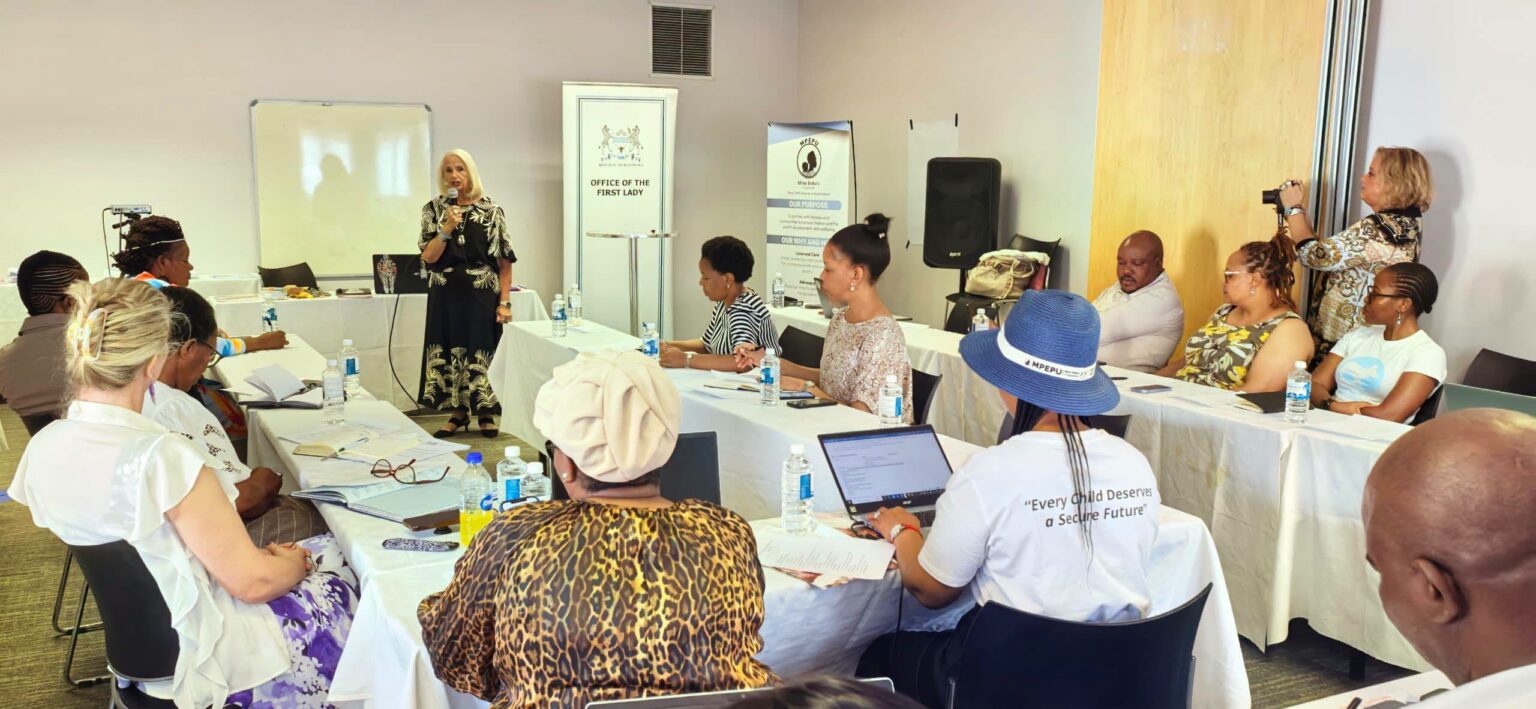
Protecting children from abuse, trafficking and violence requires a united effort from government institutions, families, schools, law enforcement agencies and community organisations. This message was at the centre of a child protection workshop organised by the Office of the First Lady of the Republic of Botswana, which brought together stakeholders to discuss the importance of stronger partnerships in safeguarding children. The Ministry of Child Welfare and Basic Education participated in the workshop through its North West Regional Education Office, reaffirming the importance of collaboration in addressing child protection concerns. The discussions highlighted that no single institution can effectively tackle every challenge affecting children’s safety and welfare without the support of other stakeholders. The gathering also came as the Ministry reaffirmed its commitment to the United Nations goal of ending child abuse, trafficking and violence by 2030.
The workshop emphasised the need for coordinated action to create safer environments for children in homes, schools and communities. Government departments have important responsibilities in developing policies, providing services and ensuring that child protection concerns receive appropriate attention. However, families, educators, law enforcement agencies, non-governmental organisations (NGOs), community-based organisations (CBOs) and other stakeholders also play essential roles in identifying risks and supporting affected children. When these groups work together, they can improve the sharing of information, strengthen referrals and help ensure that children receive the protection and assistance they need. Strong partnerships are therefore central to building an effective child protection system that responds to concerns before they escalate and supports children who have experienced harm.
The participation of the Ministry of Child Welfare and Basic Education through its North West Regional Education Office highlights the important connection between education and child protection. Schools are not only places of learning but also important environments where adults may identify signs that a child is experiencing abuse, neglect or other forms of harm. Teachers and school administrators can help recognise concerning changes in a child’s behaviour, attendance or general wellbeing, although such signs do not automatically establish that abuse has occurred. Appropriate reporting procedures and cooperation with relevant authorities are essential to ensure that concerns are handled carefully and that children receive suitable support. By strengthening coordination between schools, families and child protection services, stakeholders can help create educational environments where children feel safe, respected and able to learn.
Families and communities also have a central responsibility in protecting children from abuse and exploitation. Parents and caregivers help shape children’s understanding of safety, trust, respect and personal boundaries. Community leaders and local organisations can support these efforts by raising awareness, encouraging responsible caregiving and helping families understand where to seek assistance when problems arise. They can also help challenge harmful attitudes that allow violence against children to remain hidden or go unreported. When communities recognise child protection as a shared responsibility, they can contribute to environments where concerns are taken seriously and children’s welfare receives greater attention.
The workshop further reinforced the importance of involving law enforcement agencies and organisations that provide social support. Child abuse and trafficking can involve complex circumstances that require timely reporting, careful investigation and appropriate assistance for victims. Different institutions have distinct responsibilities, and effective cooperation can help reduce gaps in the protection process. Clear communication, appropriate referral systems and respect for children’s privacy are important when responding to sensitive cases. A coordinated approach can also help prevent children from having to repeat distressing experiences unnecessarily when seeking assistance from different service providers.
The Ministry’s commitment to the United Nations goal of ending child abuse, trafficking and violence by 2030 places the workshop within a wider international effort to protect children’s rights and wellbeing. This commitment reflects the importance of taking practical steps to prevent violence, improve responses to abuse and strengthen systems that protect vulnerable children. Achieving meaningful progress requires more than public declarations or policy commitments. It calls for sustained awareness programmes, effective reporting mechanisms, accessible support services and continued cooperation between institutions responsible for children’s welfare. Monitoring progress and identifying gaps in existing responses are also important to ensure that commitments lead to tangible improvements in children’s lives.
An important announcement made during the workshop was that the First Lady of Botswana is expected to visit the North West District in November for a scheduled Mpepu Pitso. The planned gathering is expected to provide a further opportunity to address child protection issues affecting the district and strengthen engagement among relevant stakeholders. Such discussions can help bring attention to local concerns and encourage communities and institutions to work together on practical solutions. The visit may also provide an opportunity to reinforce awareness of children’s rights and the responsibilities of adults and institutions in safeguarding them. Further details about the issues to be discussed and any outcomes of the planned gathering were not provided in the workshop announcement.
The expected Mpepu Pitso in the North West District also highlights the importance of community participation in child protection initiatives. National policies and institutional programmes are more effective when they reflect the experiences and concerns of the communities they are intended to serve. Local discussions can help stakeholders identify challenges affecting children, explore gaps in available support and strengthen cooperation between families, schools and service providers. They can also encourage community members to report concerns through appropriate channels rather than treating child abuse as a private matter that should remain hidden. By bringing different voices into the discussion, such gatherings can support a shared understanding of the practical steps needed to improve children’s safety.
Protecting children requires consistent action before, during and after incidents of abuse or exploitation. Prevention includes educating children and adults about safety, promoting positive caregiving and addressing attitudes that tolerate violence. When concerns arise, children need safe reporting channels and timely responses from trained and responsible professionals. Those who experience abuse may also require ongoing emotional, social and other appropriate support to help them recover and regain a sense of security. These responsibilities cannot rest on one ministry or organisation alone, which makes continued cooperation among government departments, schools, families, law enforcement agencies and civil society essential.
The child protection workshop organised by the Office of the First Lady has reinforced the importance of a coordinated national response to abuse, trafficking and violence against children in Botswana. Through the participation of the Ministry of Child Welfare and Basic Education’s North West Regional Education Office, the gathering highlighted the role of education institutions and the need for stronger partnerships across communities. The Ministry’s commitment to the 2030 goal further underscores the importance of turning child protection objectives into practical action. The expected November Mpepu Pitso in the North West District offers another planned opportunity to discuss these concerns and encourage greater community involvement. Lasting progress will depend on whether stakeholders continue working together to ensure that every child receives the safety, dignity, care and protection they deserve.