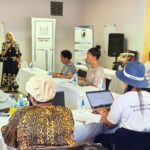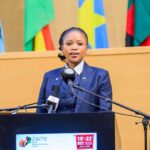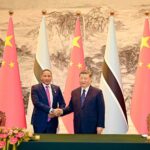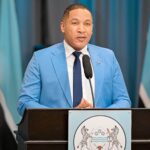
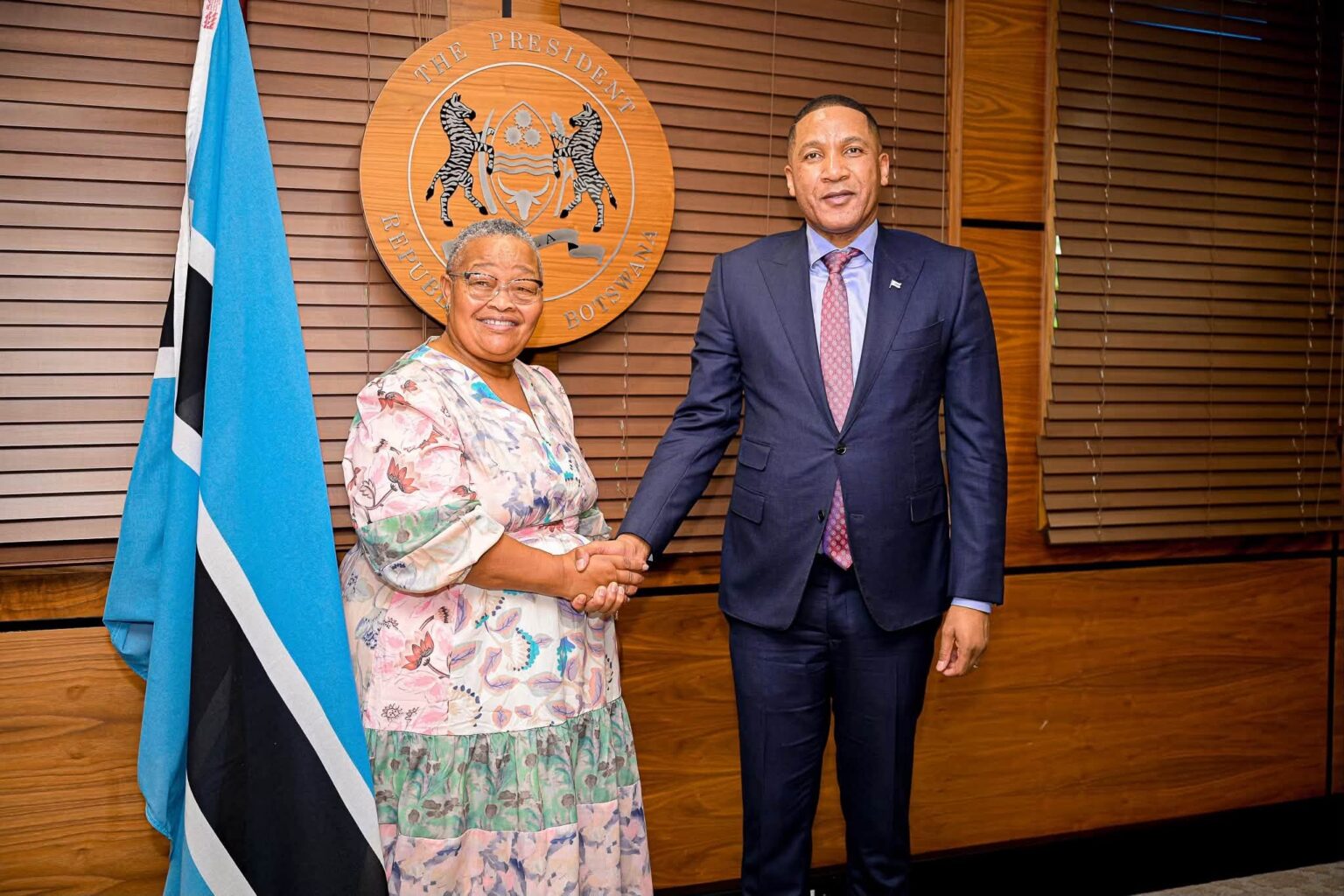
President Advocate Duma Gideon Boko has called for a shift from legislative commitments and political quotas to meaningful action that advances women’s empowerment and gender equality in Botswana. He made the remarks during a courtesy call by the Southern African Development Community (SADC) Parliamentary Forum Lobbying and Advocacy Mission, led by Honourable Sylvia Lucas-Izacks, the Forum’s Vice President. The engagement focused on the barriers that continue to limit women’s participation in political leadership, decision-making and broader social development. President Boko emphasized that adopting laws and policies is an important step, but these measures must produce practical improvements in the lives of women and girls. He stressed that achieving gender equality requires sustained efforts to address deeply rooted social attitudes, institutional weaknesses and discriminatory practices that prevent women from accessing equal opportunities.
President Boko highlighted the structural, cultural and societal barriers that continue to affect women’s representation and participation in leadership across Botswana and the wider region. He identified entrenched patriarchal attitudes, limited access to financial resources and discriminatory practices as major obstacles to women seeking political office and participating in important decisions. These challenges can restrict women’s ability to campaign effectively, secure support and compete on equal terms with their male counterparts. They can also affect the opportunities available to women in public institutions, workplaces and community leadership structures. Addressing these barriers requires more than formal recognition of women’s rights, as lasting progress depends on changing the conditions that prevent women from exercising those rights in practice.
The President also raised concerns about the gap between political parties’ constitutional commitments to gender representation and the actual outcomes achieved. Although quotas have been adopted to encourage greater participation by women, he noted that these measures have not always resulted in meaningful representation. Social perceptions about women’s roles, combined with institutional and financial challenges, can undermine efforts to create more inclusive political structures. Political quotas can provide a framework for improving representation, but their effectiveness depends on how they are implemented and whether women receive genuine opportunities to participate in decision-making. For gender equality commitments to deliver measurable results, political parties and public institutions must look beyond formal requirements and address the practical challenges that continue to limit women’s advancement.
Meaningful women’s empowerment also requires women to have a fair opportunity to influence policies, shape public priorities and contribute to decisions that affect their communities. Representation alone does not necessarily guarantee that women can exercise authority or have their concerns taken seriously. Women who enter leadership positions need institutional support, access to resources and an environment that allows them to perform their responsibilities without discrimination. This includes addressing practices that undermine their credibility, restrict their participation or create unequal expectations based on gender. President Boko’s remarks underscored the importance of ensuring that women are not only present in leadership structures but are also equipped and supported to contribute effectively.
Gender-based violence was another important issue highlighted by the President in the broader discussion on gender equality and social justice. Violence against women and girls can undermine their safety, independence and ability to participate fully in public and private life. Efforts to advance women’s empowerment therefore need to address the conditions that allow abuse, intimidation and discrimination to persist. This requires effective institutions, public awareness, accountability and support for those affected by gender-based violence. It also requires communities to challenge attitudes and behaviours that excuse abuse or place responsibility on victims rather than those who commit violence.
President Boko further emphasized the need to challenge discriminatory customary practices that continue to affect women’s rights and opportunities. Cultural traditions can play an important role in preserving community identity, but practices that disadvantage women must be examined in light of equality, dignity and individual rights. Addressing such issues requires constructive engagement with communities, traditional leaders and public institutions. Sustainable change is more likely when people understand why discriminatory practices cause harm and how fairer approaches can benefit families and society. The President’s position reinforced the importance of combining legal protections with changes in social attitudes so that equality becomes part of everyday life rather than remaining a policy objective.
The welfare and protection of children also featured in the President’s remarks, particularly in relation to disputes over paternity. He emphasized that disagreements about a child’s paternity should not compromise the child’s right to care and support. This position places the needs and welfare of children at the centre of family-related disputes and highlights the importance of protecting them from the consequences of conflicts between adults. Questions of paternity can involve complex legal and personal circumstances, but children should not be left without necessary care because those disputes remain unresolved. Ensuring that children receive appropriate support requires responsible decision-making, effective legal protections and an approach that prioritizes their welfare.
Botswana’s commitment to gender equality also formed part of the wider discussion, with President Boko reaffirming the country’s commitment through the ratification of relevant international and regional instruments. Such commitments provide an important foundation for advancing women’s rights, strengthening accountability and aligning national efforts with broader gender equality objectives. However, the President cautioned that legislative reforms alone cannot dismantle inequalities that have developed over generations. Laws can establish rights and set standards for institutions, but their impact depends on implementation, enforcement and public understanding. Turning commitments into meaningful change therefore requires coordination between government institutions, political parties, civil society and communities.
The engagement with the SADC Parliamentary Forum Lobbying and Advocacy Mission also highlighted the regional importance of advancing women’s participation in governance and public decision-making. Countries across Southern Africa face questions about how to strengthen representation, improve access to leadership and ensure that gender equality policies deliver practical benefits. Regional parliamentary engagement can provide opportunities to exchange experiences, discuss common challenges and identify approaches that support greater inclusion. Such cooperation is particularly relevant when barriers to women’s participation extend beyond national legislation and involve social expectations, economic inequalities and institutional practices. Meaningful progress depends on sustained efforts to translate shared commitments into policies and actions that respond to the realities women face.
Ultimately, President Advocate Duma Gideon Boko’s message placed practical action at the centre of Botswana’s efforts to advance women’s empowerment and gender equality. His remarks highlighted the need to address patriarchal attitudes, remove barriers to political participation, confront gender-based violence and discriminatory customary practices, support women in leadership and protect children’s welfare. They also reinforced the distinction between adopting commitments and achieving results that people can experience in their daily lives. Legislative reforms and political quotas remain important tools, but their effectiveness depends on implementation and a willingness to challenge the social conditions that sustain inequality. For Botswana to make lasting progress, gender equality must be reflected not only in laws and political declarations but also in the opportunities available to women and girls, the protection of their rights and their ability to participate fully in shaping the country’s future.