
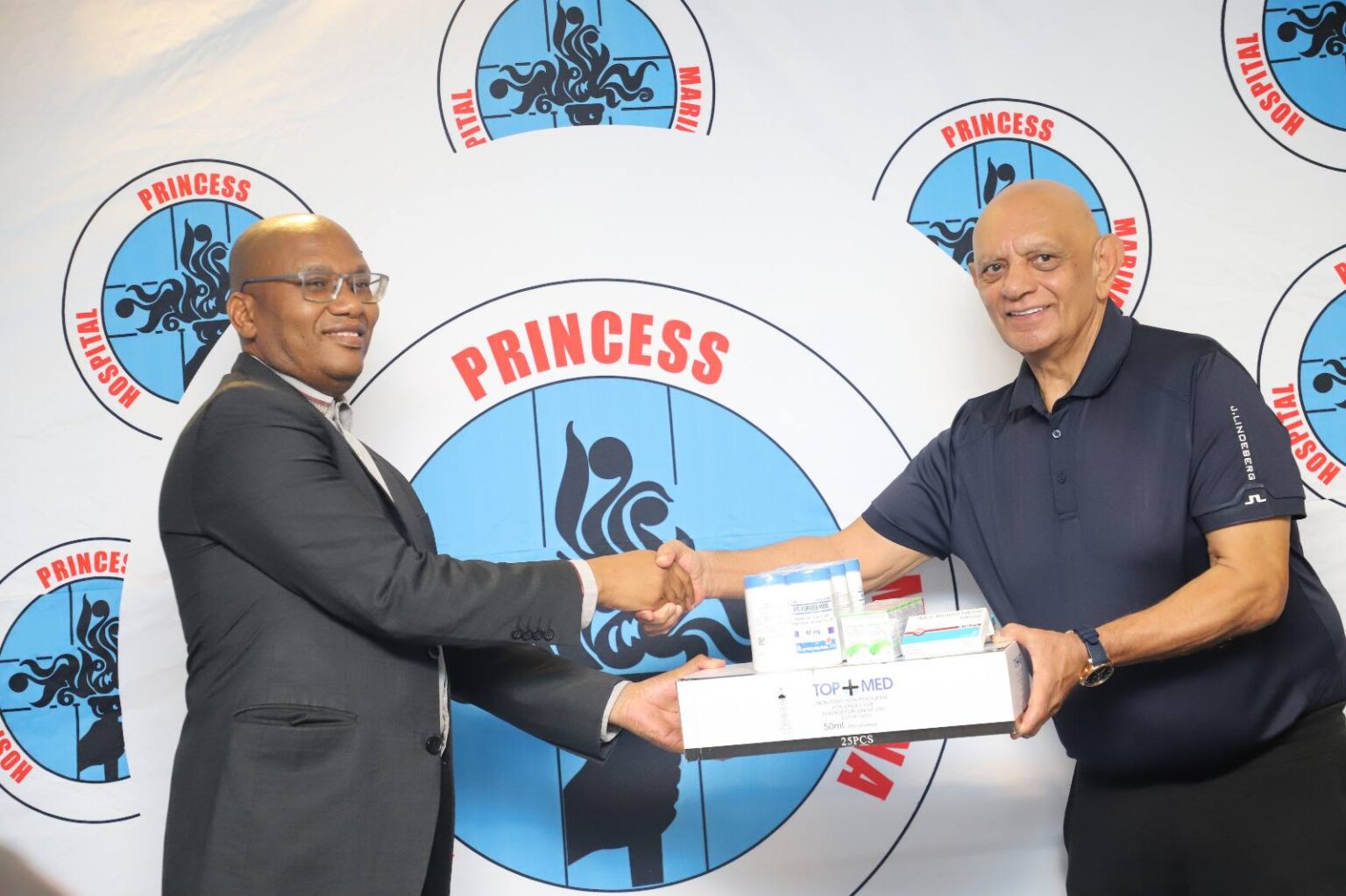
Healthcare facilities rely heavily on consistent supplies of medicines to provide effective treatment to patients. In many hospitals, donations from individuals and organizations play a meaningful role in strengthening medical services and ensuring that essential treatments remain accessible. Acts of generosity from members of the community often help bridge gaps in healthcare resources. Yesterday morning, businessman Farouk Ismail demonstrated this commitment to community welfare by donating critical medicines valued at P80,000. The donation was made to Princess Marina Hospital, one of Botswana’s main referral hospitals that serves thousands of patients each year.
The contribution was received with appreciation by hospital staff who recognized the importance of the medicines in supporting patient care. Hospitals frequently face pressure to maintain sufficient stocks of essential medication, particularly in busy public healthcare institutions. Donations such as this one help ensure that patients continue to receive timely treatment without unnecessary delays. The medicines donated by Ismail are expected to support several departments within the hospital. By strengthening available resources, the donation will help healthcare professionals continue their work with greater confidence and efficiency.
Princess Marina Hospital plays a crucial role in Botswana’s healthcare system. As a major referral hospital, it provides specialized treatment for patients from across the country. The facility treats a wide range of medical conditions and handles complex cases that require advanced care. Because of its high patient volume, the hospital requires a steady supply of medications and medical equipment. Contributions from private individuals therefore provide valuable support to the hospital’s daily operations.
Community support remains an important element in strengthening healthcare systems. When businesses and individuals contribute to medical institutions, they help extend the reach of healthcare services. Donations can improve treatment outcomes by ensuring that essential resources are available when they are needed most. In many cases, these contributions directly affect the quality of care patients receive. The donation made by Farouk Ismail reflects how private sector involvement can complement public healthcare services.
Pharmaceutical supplies are among the most critical resources required in hospitals. Without adequate medication, doctors and nurses cannot deliver the treatments patients depend on. Even temporary shortages can disrupt treatment plans and create additional challenges for healthcare providers. By donating medicines valued at P80,000, Ismail helped strengthen the hospital’s ability to meet patient needs. The donation ensures that medical staff have access to vital treatments that can support recovery and improve health outcomes.
Acts of philanthropy in healthcare often inspire others within the business community to contribute as well. When influential individuals support hospitals and medical programs, they demonstrate the positive impact that community partnerships can achieve. These gestures also highlight the shared responsibility of ensuring that healthcare systems remain strong and responsive. Businesses can play an important role in supporting public institutions that serve large populations. Contributions like this one reinforce the idea that improving healthcare requires collaboration between different sectors of society.
Patients and their families ultimately benefit the most from such initiatives. Access to essential medicines can significantly improve recovery times and reduce complications during treatment. In public hospitals that serve large communities, every additional resource makes a difference. Donations therefore help create an environment where healthcare professionals can perform their duties effectively. The support provided through this contribution will assist medical teams as they continue caring for patients who rely on the hospital’s services.
The donation of critical medicines by Farouk Ismail represents a meaningful act of community support for Botswana’s healthcare sector. By providing essential resources to Princess Marina Hospital, the businessman helped strengthen the institution’s capacity to deliver quality care. His contribution demonstrates how individuals within the private sector can play an active role in supporting public health services. The gesture also serves as a reminder that partnerships between communities and healthcare institutions are essential for improving patient outcomes. As Botswana continues to develop its healthcare infrastructure, acts of generosity like this one highlight the power of community involvement in building a stronger and more resilient medical system.