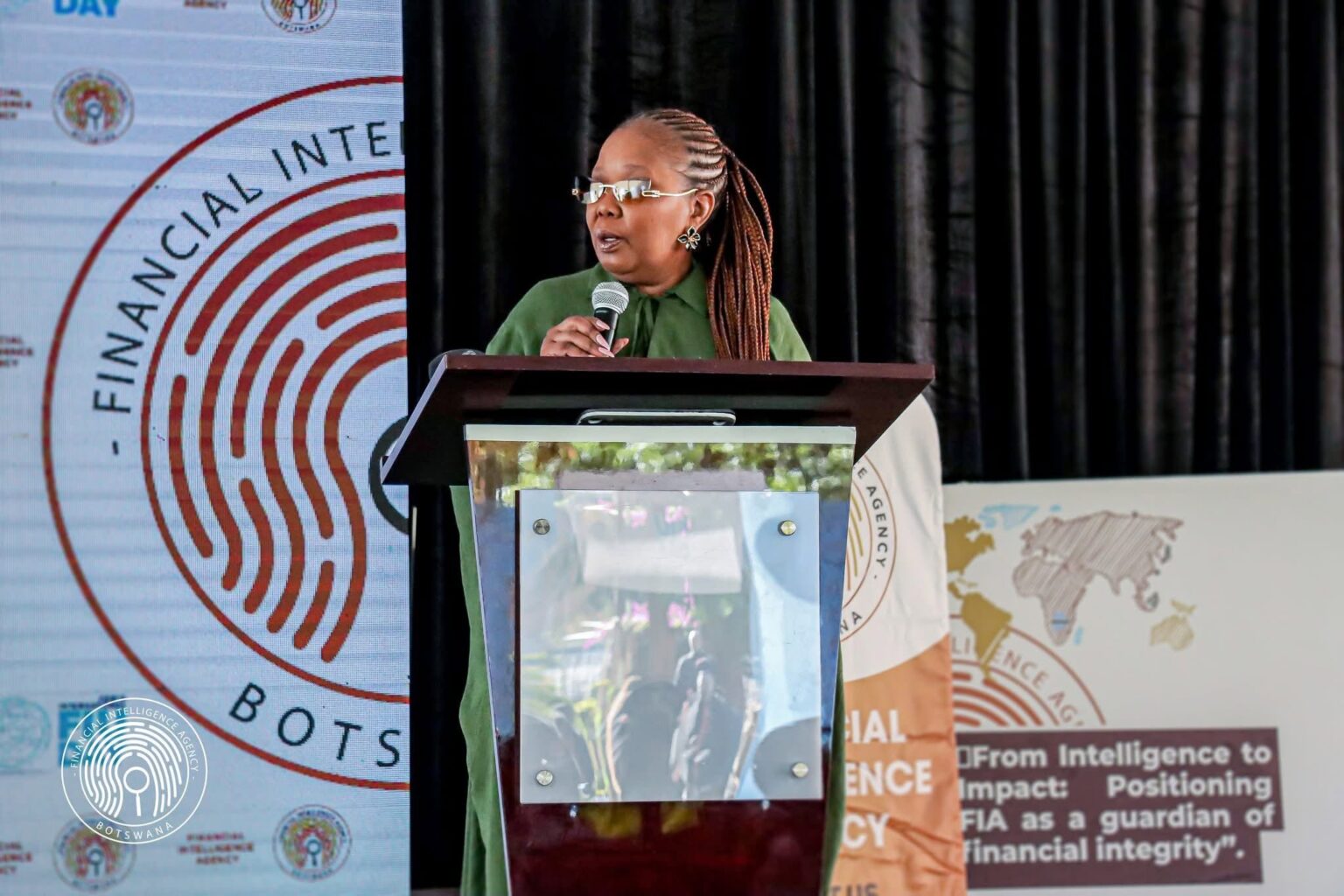
Debswana Chief People Officer Matlhogonolo Mponang has renewed the company’s call for stronger accountability, transparency and good governance as Botswana continues its journey toward a more diversified and resilient economy. She delivered the message during the International Financial Intelligence Unit Day Commemoration and the launch of the FIA Strategic Plan 2026–2029 in Gaborone. Her remarks focused on the need for citizens and institutions to protect national resources while building systems that support long-term development beyond diamond dependence. She also emphasized that Botswana’s progress has been deeply shaped by the mining sector, particularly diamonds, which have driven national growth for decades. Her message placed responsibility on both leaders and citizens to safeguard these gains and expand opportunities for future generations.
Mponang highlighted the central role that diamonds have played in transforming Botswana’s economy since independence. She explained that revenues from the mining sector have supported the development of essential public services across the country. These include schools that have expanded access to education, healthcare facilities that have improved national wellbeing, and road infrastructure that has connected communities and strengthened trade. She noted that these investments have had a direct impact on the quality of life for many Batswana over multiple generations. At the same time, she stressed that this success should not lead to dependency but should instead serve as a foundation for broader economic transformation.
While acknowledging the importance of diamonds, Mponang urged a shift in mindset toward economic diversification and innovation. She called on leaders and citizens to use the existing foundation created by the mining sector to build new industries that can sustain future growth. Her remarks reflected growing national discussions around reducing reliance on natural resources and strengthening sectors such as manufacturing, services and technology. She emphasized that a resilient economy requires deliberate planning, investment in human capital and strong institutional frameworks. According to her, Botswana’s future stability depends on how effectively the country transitions from resource dependence to a more balanced economic structure.
A key part of her address focused on accountability and transparency in the management of national resources. Mponang stated that protecting public funds and ensuring responsible governance are essential to sustaining development gains. She reinforced that corruption and inefficiencies undermine progress and limit opportunities for citizens. Her message aligned closely with the work of the Financial Intelligence Agency, which continues to strengthen systems aimed at detecting and preventing illicit financial flows. She commended the agency for its ongoing efforts to protect the integrity of Botswana’s financial systems and promote accountability across institutions.
She further noted that every pula protected through strong governance systems contributes directly to national development. This includes improved service delivery, expanded infrastructure and increased opportunities for economic participation. Her comments underscored the importance of financial integrity as a driver of long-term prosperity. By reinforcing these principles, she positioned governance not only as a compliance requirement but as a core pillar of national development. Her message encouraged institutions to remain vigilant and committed to ethical management of resources.
As part of its commitment to supporting institutional development, Debswana contributed P100,000 towards the FIU Day commemoration and also supported the development of the FIA Strategic Plan 2026–2029. This support reflects the company’s broader commitment to strengthening governance frameworks and promoting national development priorities. The contribution also demonstrates the role that the private sector can play in reinforcing public institutions and supporting initiatives that enhance financial accountability. Through such partnerships, both government and industry can work together to build stronger systems that benefit the wider population. This collaboration was highlighted as an example of shared responsibility in national development.
Her address received strong attention from attendees, including Vice President and Minister of Finance Ndaba Gaolathe, who reportedly described her remarks as deeply impactful. He emphasized that her message challenged leaders to reflect on their legacy and their role in shaping a more accountable and diversified Botswana. The sentiment reflected growing awareness of the need for economic transformation and stronger governance practices across all sectors. Mponang’s remarks resonated because they connected economic performance with ethical leadership and long-term national planning. Her contribution added weight to ongoing discussions about Botswana’s development path.
The overall message from the event reinforced the importance of balancing resource-driven growth with long-term sustainability. Botswana’s diamond wealth has played a critical role in shaping its modern economy, but leaders like Mponang are calling for a future that is not solely dependent on a single industry. The focus is now shifting toward diversification, institutional strength and inclusive economic participation. As Botswana continues to develop its strategic frameworks and strengthen its financial oversight systems, voices from both the public and private sectors are pushing for greater accountability. The message is clear that sustainable development depends on protecting resources today while building opportunities for tomorrow.