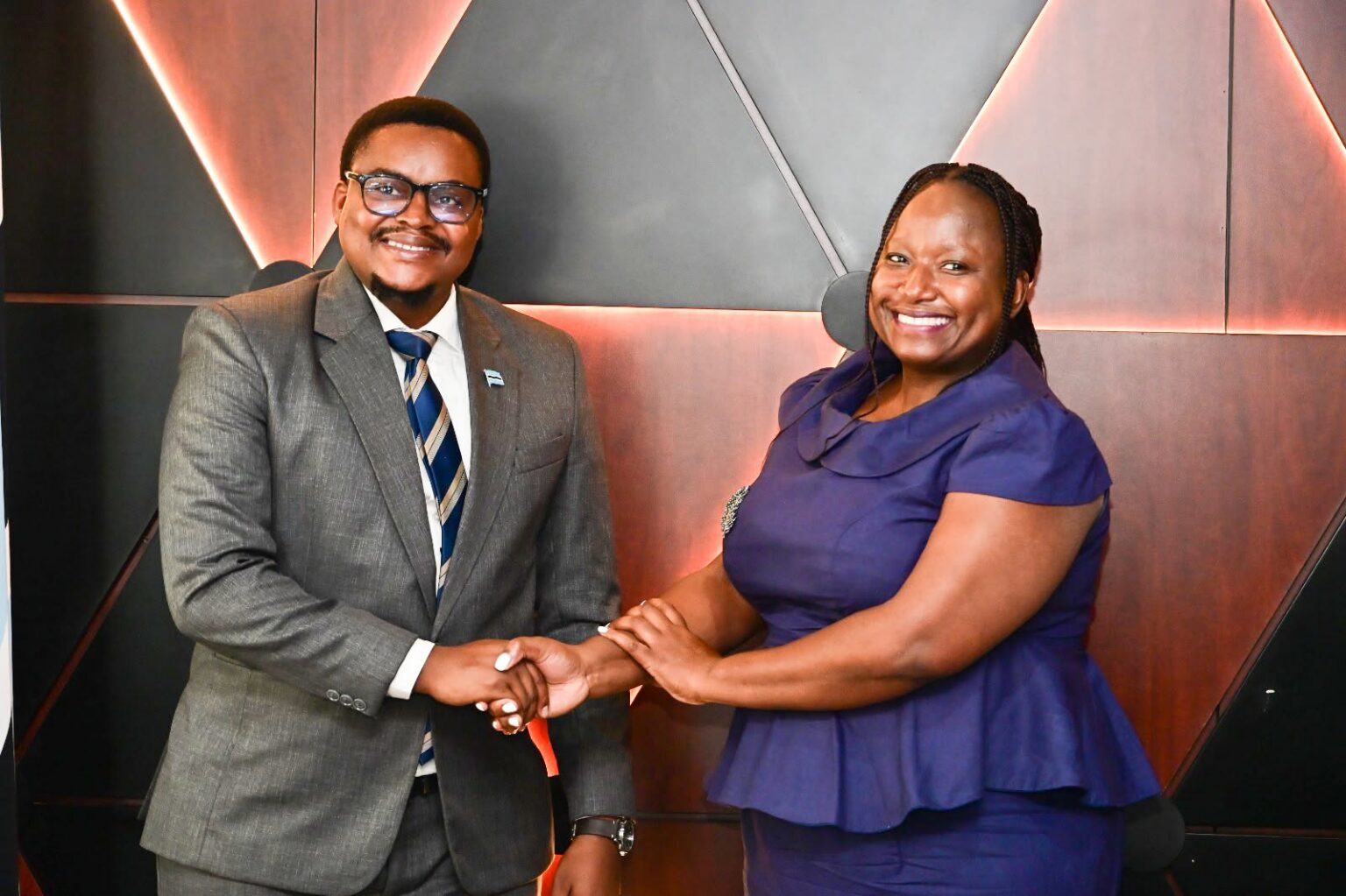
Minister of Sport and Arts, Hon Jacob Kelebeng, yesterday morning welcomed the executive team of the Education Infrastructure and Management Company (EIMC) during a courtesy visit aimed at introducing the organisation and outlining its mandate. The delegation was led by Chief Executive Officer Ms. Chanda Masendu-Kusane, who presented EIMC’s vision of modernising and centralising the management of public school infrastructure across Botswana. The engagement focused on how improved infrastructure can support both academic outcomes and the development of sport and creative talent among learners. The meeting marked an important step toward strengthening collaboration between government structures responsible for education, sport and arts development. It also reflected a shared commitment to improving the quality and accessibility of school facilities nationwide.
EIMC is a wholly government-owned service delivery entity established to professionalise and modernise the management of public school infrastructure, including sport facilities and related support services. Its mandate covers refurbishment, expansion, digitalisation and long-term maintenance of school infrastructure to ensure sustainability and efficiency. The organisation is expected to take a central role in addressing infrastructure challenges that have affected learning environments in many parts of the country. By consolidating responsibility under one specialised entity, the government aims to improve planning, execution and accountability in infrastructure delivery. The inclusion of sports facilities within its scope highlights the growing recognition of sport as a key component of education and youth development.
During the meeting, Permanent Secretary in the Ministry of Sport and Arts Ms. Nancy Neo Chengeta welcomed the establishment of EIMC and commended its initiative to improve school infrastructure. She noted that the condition of many government school facilities remains a concern and requires urgent attention. She emphasized that improved infrastructure would not only enhance academic performance but also support learners who aspire to become future athletes. Better facilities can help schools create environments where students can develop their talents in both education and sport. Her remarks reflected the ministry’s broader goal of linking education infrastructure directly to youth empowerment and national development outcomes.
Director for Sport and Recreation Mr. Moeti Godisamang also expressed support for the collaboration, highlighting the potential impact of improved facilities on talent development. He pointed out that many learners currently lack access to properly maintained sport facilities, which limits their ability to train and compete effectively. With upgraded infrastructure, schools could become stronger centres for identifying and nurturing sporting talent at an early stage. He added that physical education lessons would also benefit significantly from improved equipment and playing surfaces. The availability of quality facilities is expected to increase participation in sport and encourage healthier lifestyles among learners.
Minister Kelebeng emphasized the need for a strategic partnership between the Ministry of Sport and Arts and EIMC to ensure the effective upgrading of school sport facilities. He noted that the current state of many infrastructure assets requires urgent intervention to prevent further decline. The Minister stressed that collaboration would help align priorities and ensure that investment is directed where it is most needed. He also highlighted the importance of long-term planning to ensure that facilities are not only refurbished but also properly maintained. His remarks underscored the government’s commitment to creating sustainable infrastructure that supports both sport and education development.
Deputy Permanent Secretary for Sports Ms. Boineelo Hardy added that a pilot programme focused on elite athlete development is a key priority within the ministry’s broader strategy. She explained that improving boarding school sport facilities would be central to this initiative, as it would allow learners to train consistently in a structured environment. Enhanced facilities would also help reduce idle time among learners, particularly during weekends, by encouraging participation in structured sport activities. The pilot programme is expected to serve as a model for future national expansion if successful. Her contribution highlighted the importance of linking infrastructure development with performance-based sport programmes.
In addition to sport development, the Director of Arts Ms. Nakiso Kubanji advocated for the integration of arts and culture into the planned infrastructure improvements. She encouraged the inclusion of local artists in the design and decoration of school facilities to reflect Botswana’s cultural identity. She envisioned schools that showcase vibrant creative work, inspiring pride among learners and supporting artistic expression. Such initiatives could also create opportunities for young and established artists to contribute to public spaces in meaningful ways. Her proposal highlighted the importance of ensuring that infrastructure development supports both sport and cultural growth.
The meeting between Minister Kelebeng and EIMC concluded with a shared understanding of the importance of collaboration in transforming school infrastructure across Botswana. Both parties acknowledged that improved facilities are essential for enhancing education, sport and creative development among young people. The proposed partnership is expected to support the refurbishment and modernization of schools while also strengthening talent development systems. With a focus on sustainability, innovation and inclusivity, the collaboration has the potential to reshape the learning environment for future generations. As Botswana continues to invest in youth development, the integration of sport and arts into education infrastructure remains a key pillar for national progress and opportunity creation.