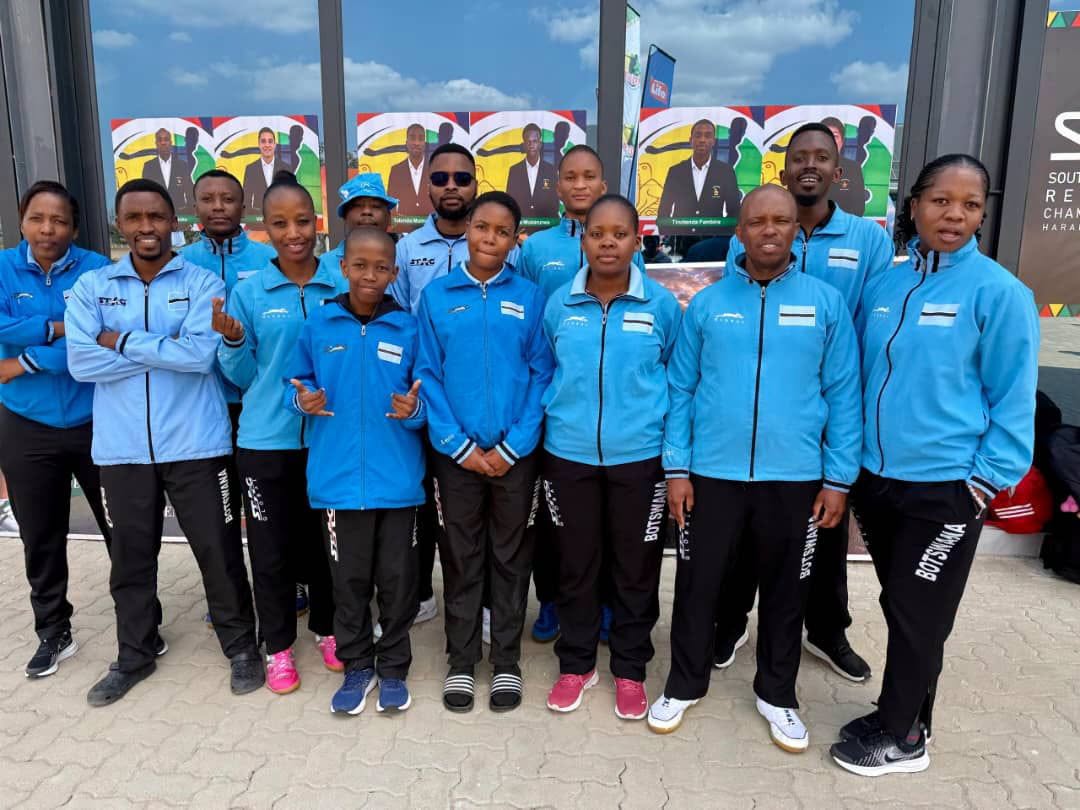
Botswana has wrapped up its campaign at the ITTF Africa Southern Africa Region World Qualifiers in Harare, Zimbabwe, with a strong overall performance that earned the nation two team medals and valuable international experience. Although the country’s players narrowly missed out on individual podium finishes, the tournament showcased the depth of talent within Botswana’s table tennis programme. The national teams demonstrated determination, consistency and competitive spirit against some of the strongest players in the Southern African region. Their performances reflect the continued growth of table tennis in Botswana and the positive impact of ongoing investment in player development. With more major international competitions on the horizon, the tournament has provided a solid platform for both the senior and junior national teams.
Botswana’s women’s team delivered one of the country’s standout performances by securing the silver medal in the team competition. The team advanced through the tournament with impressive displays before reaching the final, where they faced regional powerhouse South Africa. Despite falling short in the championship match, finishing as runners-up represents a significant achievement and highlights the team’s ability to compete at a high level against elite opposition. Winning the silver medal also demonstrates the consistency and teamwork that Botswana’s female players have developed through regular competition and structured training. The result serves as an encouraging sign for future continental and international tournaments.
The men’s team also produced a commendable performance by winning the bronze medal in the team event. Throughout the competition, the players displayed resilience and determination while competing against experienced opponents from across the region. Earning a place on the podium reflects the steady progress made by Botswana’s men’s programme in recent years. The bronze medal provides further motivation for the team as it prepares for upcoming international events where competition will become even more demanding. Success in the team competition also highlights the importance of collective effort, communication and consistency in achieving positive results at regional tournaments.
While the team events brought medals for Botswana, the individual singles competitions also featured several encouraging performances. In the women’s singles, Tshepiso Rebatenne, Emmah Lelatisitswe and Tsholofelo Gaokgalelwe each progressed to the quarter-finals after producing strong performances during the earlier rounds. Reaching the last eight in a highly competitive regional tournament demonstrates the quality and potential of Botswana’s female players. Although all three athletes were eliminated at the quarter-final stage, their performances showed that they are capable of competing with some of the region’s top talent. Their progress through multiple rounds also reflects the technical improvements and competitive experience gained through national and international competition.
Boitlamo Nkele also represented Botswana well in the women’s singles competition. She advanced to the Round of 16 before her tournament came to an end against strong opposition. Reaching the knockout stages of a regional championship remains a notable achievement, particularly in a field featuring many experienced international players. Every match at this level provides valuable learning opportunities that contribute to long-term player development. Competing against higher-ranked opponents helps athletes identify areas for improvement while building confidence for future tournaments.
The men’s singles competition also saw Botswana’s players produce determined performances despite falling short of the medal rounds. Boago Malobela, Bakang Maloka, Tshireletso Samuel and Reneilwe Lekorwe all advanced to the Round of 16 after successfully navigating the earlier stages of the tournament. Their progress demonstrated consistency and competitiveness throughout the event. However, each player’s campaign ended in the Round of 16, bringing Botswana’s men’s singles challenge in the main draw to a close. Although none advanced to the quarter-finals, reaching the knockout rounds reflects the overall strength of Botswana’s senior men’s squad.
Missing out on individual medals should not overshadow the progress made by Botswana’s players throughout the tournament. Regional qualifiers often feature some of the continent’s strongest athletes, making advancement through multiple rounds a significant accomplishment. Every international competition exposes players to different playing styles, higher levels of intensity and valuable match experience. These opportunities help athletes refine their technical abilities, tactical awareness and mental resilience under pressure. Continued participation in high-level tournaments is essential for developing players capable of competing successfully at continental and global events.
The two team medals earned in Harare represent an important milestone for Botswana table tennis. Team competitions require players to work together, support one another and maintain consistency across multiple matches. Success in these events reflects not only individual talent but also the effectiveness of coaching, preparation and overall team management. The silver medal for the women’s team and bronze medal for the men’s team demonstrate that Botswana continues to strengthen its position within Southern African table tennis. These achievements provide valuable confidence ahead of upcoming international competitions.
Attention will now shift to Botswana’s junior national team, which is preparing to compete at the ITTF Africa Youth Championships in Accra, Ghana, from 21 to 27 July. The tournament will provide young Botswana players with another important opportunity to gain international exposure and compete against Africa’s rising stars. Participation in youth championships plays a critical role in developing the next generation of national team players. Young athletes benefit from facing diverse opponents, learning from international coaches and experiencing the demands of elite competition. These experiences help prepare them for future senior-level tournaments while strengthening Botswana’s long-term player development pathway.
Following the junior championships, Botswana’s senior national team will continue its international calendar by travelling to New Delhi, India, for the Commonwealth Senior Championships from 27 July to 2 August. Competing at the Commonwealth level presents another significant opportunity to measure progress against some of the world’s strongest table tennis nations. The experience gained in Harare will provide valuable preparation as players adjust their training and refine their strategies for the next challenge. Participation in consecutive international events also helps athletes maintain competitive sharpness while continuing to build confidence and experience. The demanding schedule reflects Botswana’s commitment to exposing its players to regular high-level competition.
Botswana’s campaign at the ITTF Africa Southern Africa Region World Qualifiers ends with reasons for optimism despite narrowly missing individual medals. The silver medal won by the women’s team and the bronze secured by the men’s team underline the country’s continued progress on the regional stage. Strong performances from players across both the men’s and women’s competitions demonstrate the growing depth of talent within Botswana’s table tennis programme. As the junior team prepares for the ITTF Africa Youth Championships and the senior squad looks ahead to the Commonwealth Senior Championships in India, Botswana continues building momentum through international competition, player development and valuable competitive experience that will support the future growth of the sport.