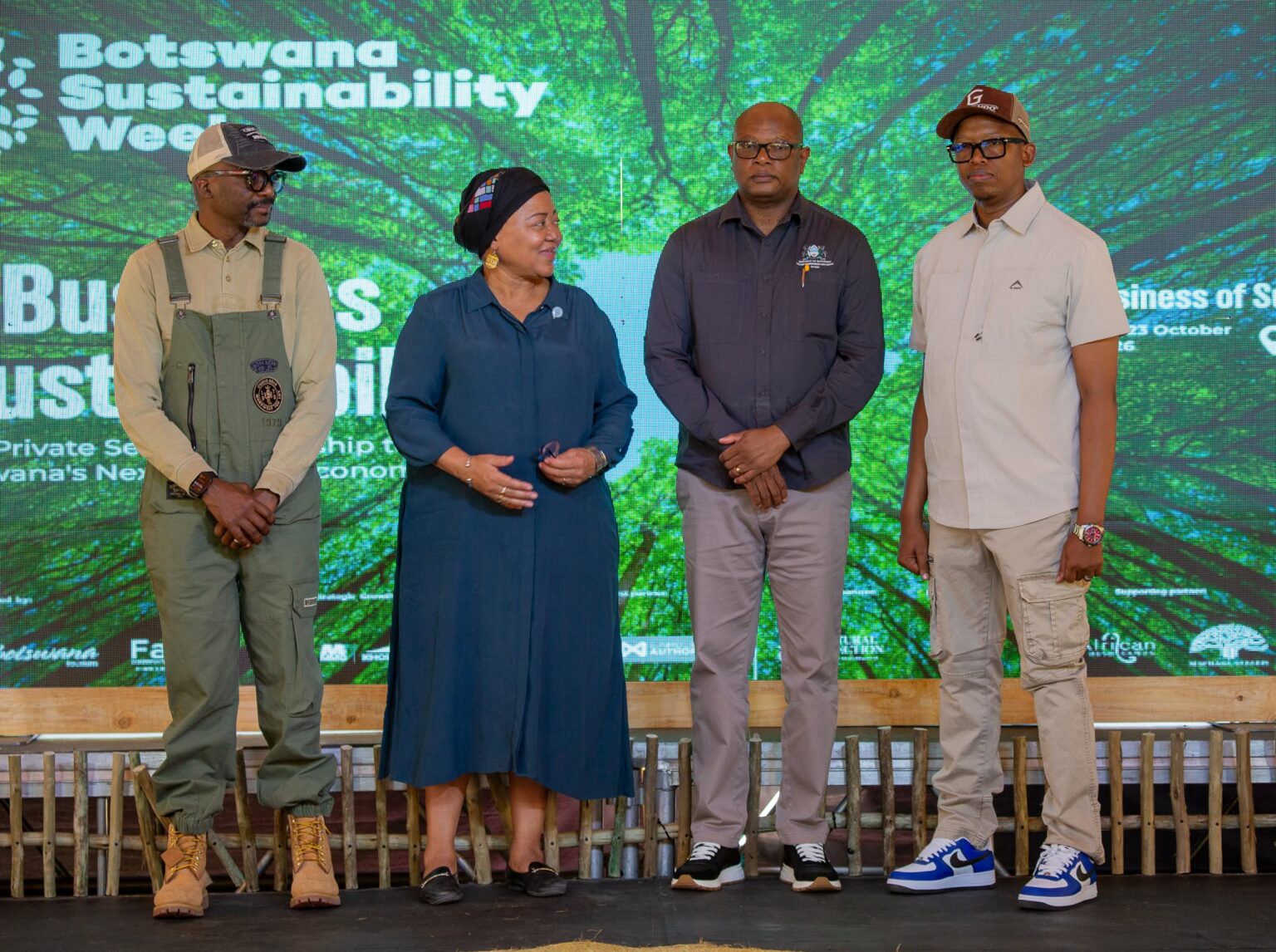
Botswana has introduced a new private sector leadership platform aimed at strengthening sustainability, environmental responsibility and corporate governance across the country’s economy. The Botswana Sustainability and ESG Private Sector Roundtable was formally launched during Botswana Sustainability Week 2026, bringing together business leaders, public institutions and investment partners committed to advancing sustainable economic development. The initiative is designed to create a structured space for private sector leaders to work together on environmental, social and governance (ESG) implementation, sustainable finance and investment opportunities that deliver measurable national benefits. Participating leaders received dedicated pins presented by government ministers to mark their commitment to the platform and its objectives. The launch signals an effort to build continuity beyond the annual sustainability event and turn commitments into coordinated action that supports Botswana’s long-term economic transformation.
The establishment of the Botswana Sustainability and ESG Private Sector Roundtable reflects the growing importance of sustainability in business decision-making and investment planning. Environmental, social and governance considerations help organisations assess how their activities affect the environment, employees, communities and the wider economy. These considerations can influence investment decisions, risk management, corporate accountability and long-term business performance. For Botswana, creating a platform that brings private sector leaders together could help businesses identify shared priorities and develop practical responses to sustainability challenges. The roundtable is intended to support collaboration rather than leave each organisation to address these issues independently. Its success will depend on the ability of participating institutions to translate discussions and commitments into measurable outcomes.
The platform was introduced at Botswana Sustainability Week 2026, known as BSW2026, with representatives from businesses and institutions across different sectors receiving their commitment pins. Among those represented were Jennifer Lalley, Co-Founder of Natural Selection, Thato Jensen, Chief Executive Officer of the Local Enterprise Authority, and Professor Alinah Segobye, Chief Executive Officer of the Botswana Human Resource Development Council. Their participation reflects the importance of connecting private enterprise with organisations involved in tourism, business development and skills planning. These areas can contribute to a more sustainable economy by supporting local businesses, developing relevant skills and encouraging responsible investment. The inclusion of leaders from different fields also provides opportunities to consider sustainability challenges from several perspectives. Such cooperation can help identify practical initiatives that respond to the needs of businesses, workers and communities.
Additional pins were presented to representatives from De Beers, Chobe Holdings Limited, MMG Limited Khoemacau and the Gambling Authority of Botswana. These organisations represent a range of activities and institutional responsibilities, demonstrating the platform’s potential to bring different sectors into a common sustainability dialogue. Mining, tourism, business regulation and other economic activities each face distinct environmental and social considerations. A shared platform can help participants exchange knowledge, identify areas of common interest and explore solutions that may benefit more than one sector. It can also encourage organisations to consider how their individual sustainability strategies contribute to broader national development objectives. By creating a regular forum for engagement, the roundtable aims to support a more coordinated approach to ESG implementation across Botswana’s economy.
One of the platform’s defining features is its plan to bring private sector leaders together on a quarterly basis. This regular schedule is intended to maintain momentum beyond Botswana Sustainability Week and provide a continuing space for collaboration. Quarterly meetings could allow participants to review progress, discuss emerging challenges and identify opportunities for joint projects. They may also help organisations build stronger working relationships and coordinate activities that require cooperation across institutional boundaries. Consistent engagement is important because sustainability initiatives often require long-term planning, investment and follow-through. The roundtable’s ongoing structure is therefore intended to support continuity and encourage leaders to remain focused on shared priorities after the launch event.
Environmental, social and governance implementation is a central focus of the new platform. Environmental considerations include the responsible use of natural resources, waste management, energy efficiency and the reduction of harmful emissions. Social considerations involve issues such as worker welfare, community relationships, equal opportunities and the broader effects of business activities on people’s lives. Governance focuses on accountability, ethical conduct, transparency and the systems organisations use to make and oversee decisions. Although businesses may approach these areas differently depending on their activities, consistent attention to ESG can help them identify risks and improve how they manage their responsibilities. The roundtable offers an opportunity for participating organisations to discuss how these principles can be applied in ways that support both commercial performance and national development.
Sustainable finance and investable projects are also among the platform’s stated priorities. Sustainable finance involves directing funding towards activities that consider long-term environmental, social and economic outcomes. For businesses, access to suitable financing can determine whether they can adopt cleaner technologies, improve resource efficiency or expand operations in more sustainable ways. However, financing alone does not guarantee success, as projects also need sound planning, clear objectives and credible assessments of their expected benefits. The roundtable aims to encourage discussion around opportunities that can attract investment while supporting Botswana’s development priorities. By bringing leaders and investment partners together, the platform may help identify projects that are commercially viable and capable of delivering wider economic or environmental benefits.
The emphasis on measurable national impact is another important element of the initiative. Sustainability commitments can have limited value if organisations do not establish clear goals and assess their progress over time. Measuring results helps businesses understand whether their programmes are reducing environmental impacts, improving social outcomes or strengthening governance practices. It can also help participating organisations identify gaps, adjust their approaches and demonstrate accountability for the commitments they make. For a platform built around cooperation, shared indicators and regular progress reviews could help participants understand where collective action is producing results. The focus on measurable impact therefore places practical implementation at the centre of the roundtable’s purpose.
The platform also brings attention to the role of local enterprise development and human capital in Botswana’s sustainable economic transformation. The participation of the Local Enterprise Authority and the Botswana Human Resource Development Council creates a connection between sustainability discussions, business development and workforce skills. Small and medium-sized enterprises may need practical support to understand ESG requirements, improve their business practices and access suitable financing. Workers also need relevant skills as businesses adapt to changing technologies, environmental expectations and market demands. Connecting these priorities can help ensure that sustainability efforts extend beyond large organisations and create opportunities for smaller businesses and local communities. This broader approach is important if Botswana’s economic transformation is to include a wider range of enterprises and workers.
The initiative’s investment partners include Green Loop Foundation, Chobe Holdings, Sedia Hotel, Botswana Tourism, African Bush Camps, African Bush Camps Foundation, Gambling Authority, The Fauna Conservation Trust of Ngamiland, Natural Selection Travel, MMG Limited Khoemacau, Water Utilities Corporation, Machaba Safaris and Eskom Holdings SOC Ltd. Their involvement brings together organisations connected to tourism, conservation, mining, utilities and other areas of economic activity. This range of partners creates opportunities to explore sustainability issues that cross traditional industry boundaries. Tourism and conservation, for example, depend on responsible management of natural assets, while mining and utilities face important questions about resource use, infrastructure and environmental performance. Collaboration can help participating organisations share experience and identify projects that support common objectives. The value of this partnership network will depend on how effectively its members contribute expertise, resources and practical solutions.
The presentation of commitment pins by participating government ministers marked the formal introduction of the roundtable and symbolised the participating leaders’ commitment to the platform. However, the longer-term importance of the initiative will be determined by the actions that follow the launch. Participants will need to identify clear priorities, agree on responsibilities and establish ways to track progress across their activities. They will also need to consider how proposed projects can be financed, implemented and evaluated. Regular meetings can provide a useful structure for this work, but tangible results will require sustained participation and cooperation. Turning leadership commitments into practical outcomes will be essential to building confidence in the platform and demonstrating its value to Botswana’s economy.
The Botswana Sustainability and ESG Private Sector Roundtable represents an effort to strengthen private sector cooperation around sustainability, responsible investment and measurable national development. By establishing quarterly engagement, the platform aims to maintain progress beyond Botswana Sustainability Week 2026 and encourage more coordinated action among businesses and institutions. Its focus on ESG implementation, sustainable finance and investable projects provides a framework for connecting environmental responsibility with economic opportunity. The participation of organisations from different sectors also creates scope for shared learning and partnerships that address common challenges. Ultimately, the roundtable’s contribution will depend on its ability to turn commitments into practical projects, stronger business practices and measurable benefits for Botswana. Its launch provides a starting point for sustained collaboration towards a more resilient, inclusive and sustainable national economy.